Culture
Do Albanians Only Marry Albanians?
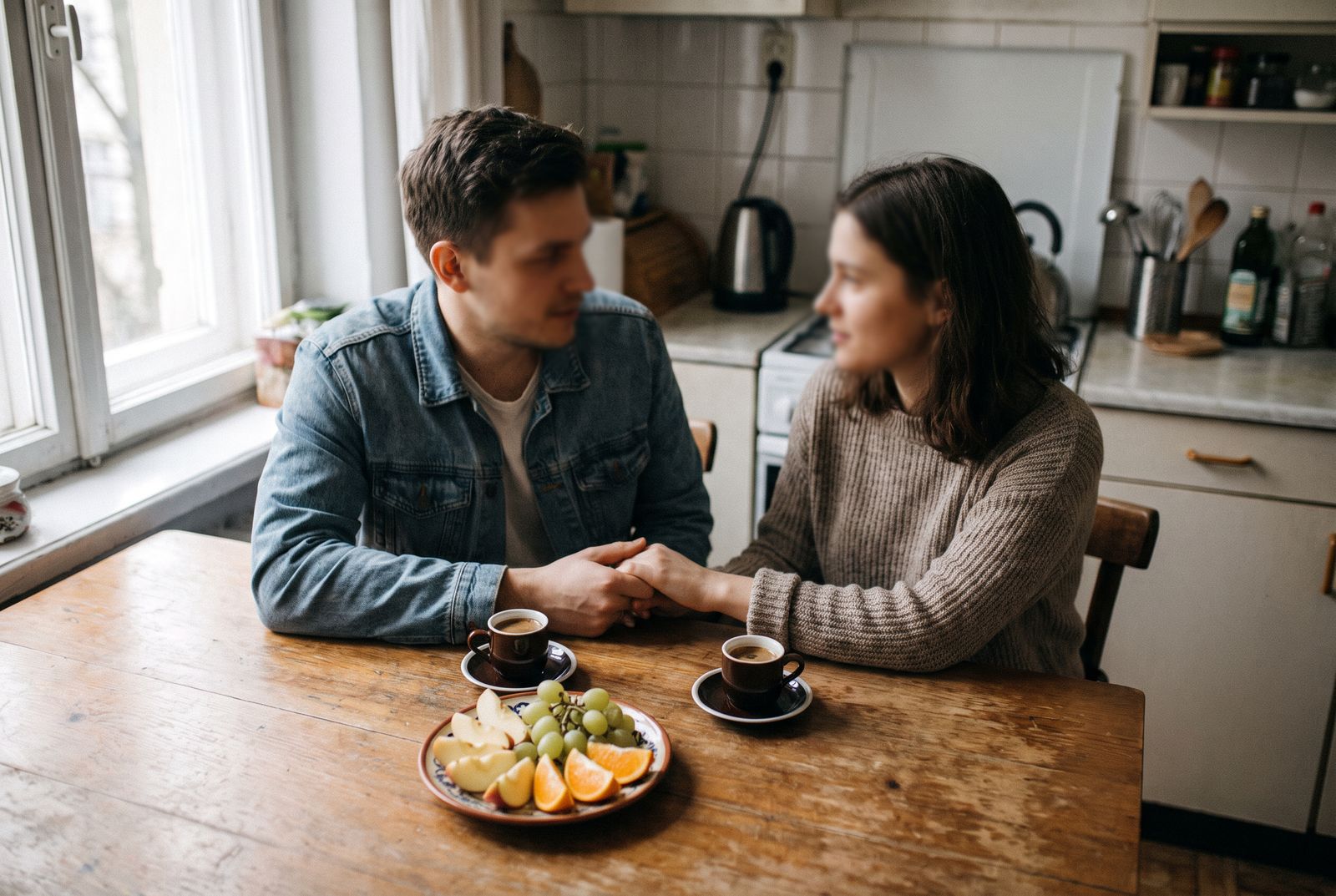
No. There is no law, no religious commandment and no cultural rule that forces Albanians to marry each other. What does exist is an expectation: many families hope that a future daughter-in-law or son-in-law will have Albanian roots, and depending on the family, that hope ranges from a quiet wish to real pressure. How strong it turns out to be depends far less on the culture than on the actual people sitting at the kitchen table. This piece answers the question as honestly as possible, both for those asking it about their own lives and for those loving their way into an Albanian family from the outside.
Where the expectation comes from
For long stretches of history, being Albanian was not something any state guaranteed. Centuries under foreign rule, then borders drawn straight through the middle of Albanian-speaking lands, followed by dictatorship and war. What carried the language and the culture through all of it was not an institution but the family. Look at the history that way and you understand why, for older Albanians, marriage was never a purely private matter. It was the hinge on which language, names and belonging swung into the next generation.
Emigration only sharpened that feeling. Those who came to Germany or Switzerland as workers in the sixties, or fled the war in the nineties, experienced life abroad as a place where what is yours can quietly disappear. Many diaspora parents are still driven by one very concrete fear: that the grandchildren will no longer speak Albanian, will not know the celebrations, will lose the thread back home. An Albanian partner for their children looks like the simplest insurance against that loss.
Then there is the inner perspective of the younger generation itself, which has little to do with pressure: the wish to be understood without constantly translating yourself. We wrote about that side of the story in depth in our article on why Albanians marry Albanians. The family's expectation and a person's own wish often overlap, but they are not the same thing. One is a demand from outside. The other is a free choice.
How common are mixed marriages today, really?
Honesty matters more here than a tidy number: reliable statistics on this question are rare. Official data records citizenship, not heritage. A woman with Albanian parents and a German passport who marries a German man shows up as a German-German marriage. Anyone claiming to know the exact percentage of Albanians who marry outside the community has usually invented the figure.
What can be said without inventing anything: binational marriages have long been everyday reality in countries like Germany, as the ongoing marriage statistics of the Federal Statistical Office show. And a glance into any sizable Albanian community in Germany, Switzerland, Austria, the UK or the US confirms the trend with the naked eye. At weddings, German or American in-laws now sit next to aunts from Prishtina. Family group chats include names that would have been unthinkable twenty years ago. Marriages with non-Albanian partners grow more common with every generation. They are not yet the norm, but they stopped being a sensation a while ago.
Three generations, three answers
How the question gets answered depends heavily on whom you ask.
For the first generation, the grandparents and the parents who emigrated, it often was not a question at all. You married Albanian, frequently someone from the same region, sometimes introduced through relatives. Not out of hostility toward everyone else, but because that was how the world was arranged, and because people abroad held tightly together.
The second generation, born or raised in the diaspora, stands in between. Many genuinely want an Albanian partner, but as their own choice, not as an assignment. The same people who dream of building an Albanian home will push back hard against anyone else deciding it for them. For this generation, the line between a wish and a rule is the whole point.
For the third generation, the question often shifts again. Friend groups are mixed, being Albanian is one part of identity among several, and the parents themselves grew up in Germany or Switzerland. What stands out most is how far the older generation has moved too. The same parents who would have declared a German boyfriend unthinkable in 1996 are pouring him raki in 2026 and showing him photos of the home village. People change when life asks them to, and forty years of diaspora ask insistently.
Sons and daughters: the double standard everyone knows
Part of the answer is uncomfortable. In many families, the expectation is not distributed evenly. When a son brings home a German girlfriend, there may be sighs and a pointed comment from an aunt, but rarely a crisis. When a daughter brings home a German boyfriend, the reaction is often louder, the questions sharper, the resistance longer.
Behind it sits an old way of thinking that ties the family's standing more closely to its daughters than to its sons, mixed with genuine worry that expresses itself clumsily. It can be explained but not justified, and more and more families see that themselves. It is often the mothers, who lived under that standard, who deliberately break it for their own daughters. And it is the brothers who now sit beside their sister when she introduces her boyfriend to the parents. The double standard still exists, but families are dismantling it themselves, from the inside.
When your partner has no Albanian roots
So what actually happens when someone chooses a partner without Albanian roots? No two stories are identical, but a pattern repeats across many families:
- The first moment. Some parents react with relaxed curiosity. Others with silence, disappointment, or an appeal to think of the family. This first moment usually feels worse than it turns out to be.
- The mediation phase. Siblings and cousins turn into diplomats. The mother softens before the father does, or the other way around. More gets discussed in the background than the couple ever finds out.
- The first meeting. Almost always a meal, and almost always the turning point. A guest who shows respect, listens to the parents and visibly has serious intentions can dissolve most fears in a single evening.
- Normalization. By the engagement at the latest, often with the first grandchild, the stranger becomes family. Many parents who doubted loudest at the start later defend their son-in-law or daughter-in-law most fiercely.
Still, not every story ends this way. Some families resist for a long time, and a few never come around. Anyone facing this should give the process time, keep the conversation free of ultimatums, and prepare the partner for what to expect. A separate guide on handling that conversation with parents is coming to this magazine. For the practical and legal side of marrying across two citizenships, from paperwork to the registry office, see our article on binational marriage in Germany.
What it looks like from the non-Albanian partner's side
Anyone who loves their way into an Albanian family from the outside experiences two things at once, and quickly: more scrutiny and more warmth than they expected. The first meeting can feel like a job interview, with direct questions about work, family and plans that would rarely be asked so bluntly elsewhere. At the same time, the table is set as if for a wedding, and politely declining twice still gets you a third plate.
It helps to read both as the same thing: the scrutiny is care in another form. Parents who ask questions want to know their child is safe. A few words of Albanian, sincere interest in where the family comes from, and patience with the sheer number of relatives open more doors than any gift. What daily life in such a relationship looks like, and where it tends to rub, is the subject of our piece on the German-Albanian relationship. And if the first visit to the parents is coming up, the article on meeting the Albanian family walks through the preparation in detail.
One more point tends to get overlooked: the non-Albanian partner brings a family too, and reservations exist on that side as well, just voiced more quietly. A good mixed relationship translates in both directions.
Not a rule, but a conversation
So the honest answer to the original question stays double. No, nobody has to. And yes, the expectation is real, barely noticeable in some families and a serious obstacle in others. Understanding it beats merely deflecting it: behind the parents' wish there is almost always love, mixed with the fear of losing something precious. Choosing an Albanian partner is a legitimate choice. Choosing differently breaks no rule. It starts a family conversation, and the great majority of families turn out to be capable of having it.
embla is the dating app for Albanians worldwide, in the diaspora and back home. For anyone who wants a partner with the same roots, it makes that search self-determined, with no detour through the extended family. The app launches soon, and the waitlist is open.
Frequently asked questions
Do Albanians have to marry other Albanians?
No. There is no law and no religious or cultural rule that requires it. What does exist in many families is a noticeable expectation that a partner should have Albanian roots. How strong that expectation is varies enormously from family to family, and it is clearly weakening with each younger generation.
Can Albanian women marry non-Albanian men?
Yes, of course. Nothing legal or religious stands in the way, and many Albanian women are happily married to German, Swiss, American and other non-Albanian husbands. In some families, however, daughters face more resistance than sons would. That double standard is real, and the younger generation increasingly calls it out.
What do Albanian parents say about a non-Albanian partner?
First reactions range from relaxed curiosity to silence and disappointment. After the initial shock, siblings often mediate, and a first shared meal tends to defuse most of the tension. A partner who shows respect and genuine interest in the family wins most parents over with time.
How common are mixed marriages among Albanians?
Reliable numbers barely exist, because official statistics count citizenship rather than heritage. The trend is still visible: in the diaspora, marriages with non-Albanian partners become more common with every generation and are a normal part of most communities today.
Ready for a spark instead of a thousand swipes?
Join the free waitlist and secure 6 months of embla+ free.