Dating
Why Albanians Marry Albanians: The Honest Reason
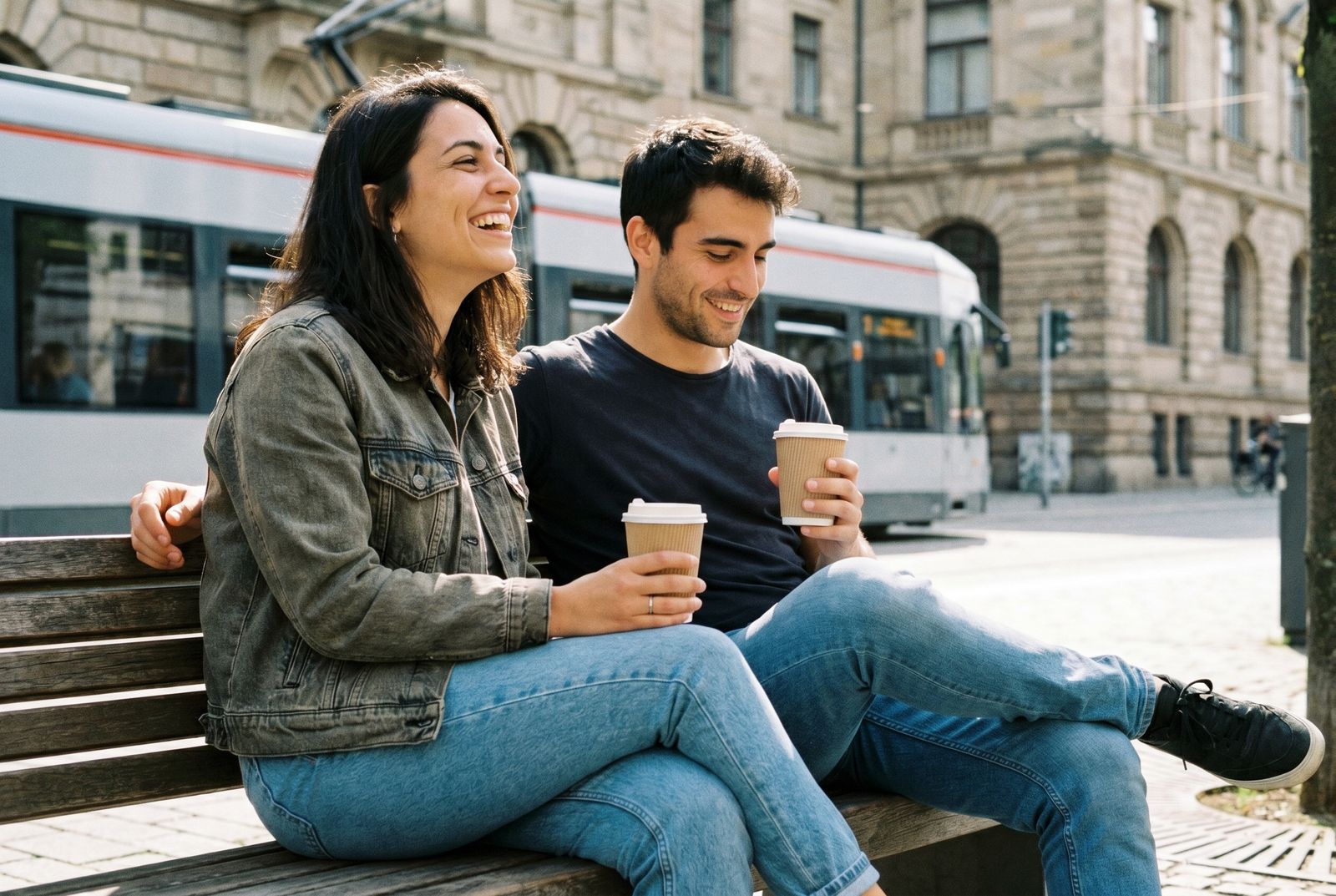
Ask ten Albanians from the diaspora whether they would like a partner with the same roots, and most will say yes. Ask why, and the word origin almost never comes up. A different one does: being understood. That is what this piece is about. Not a rule telling anyone who to love, but a wish that many share and few ever get explained properly.
It Is Rarely About Origin, Almost Always About Being Understood
If you grew up in Germany, Switzerland or Austria with Albanian parents, you know the constant shuttling between two worlds. One life at school, another at home. You translate all the time, not just words but whole contexts. Why twenty people are sitting in the apartment on a Sunday. Why a call from your grandmother takes priority. Why you show up to a wedding when you barely know the bride.
A partner from the same background does not have to learn any of that. He knows that saying no to a family gathering is simply not on the table, without needing a reason. She understands why one particular look from your mother says everything. This not having to explain yourself is the heart of it. Many describe it as the feeling of finally being fully meant, rather than a footnote in your own life that always needs a caption.
Language Carries More Than Words
Language is the most obvious factor and the most underrated. It is not about speaking flawless Albanian. Plenty of third-generation people no longer do. It is about the undertones. A term of endearment like zemër, literally heart, lands differently in your own mother tongue than in any translation. A joke that lives off a shared television moment from the nineties. Your grandmother's proverb that you cannot move into English without it sounding silly.
With a partner who shares that layer, you skip the footnotes. You can switch languages mid-sentence because that one Albanian word simply fits more precisely. Anyone who has lived that is reluctant to give it up again.
Then there is the tone you use with your own parents. How you show respect, how you express tenderness, how you argue without wounding, all of that is shaped differently in your mother tongue than in German. A partner who knows that tone also understands the moments when someone suddenly slips into Albanian because the feeling has grown too big for the second language. Those switches are rarely accidental. They show where the heart is actually at home.
Family Is Not an Add-On, It Is Part of the Relationship
In Albanian culture you do not marry only a person, you enter a web. Parents, siblings, uncles, aunts, cousins out to the third degree all belong to it. That can be warm and supportive, and sometimes exhausting. For many, this very closeness is a value they want to pass on, not something they hope to shed.
A partner who comes from a similar family structure does not see the many obligations as a burden but as normal. The weekend often belongs to family. When someone is ill, everyone closes ranks. Respect toward elders is not up for negotiation. You do not have to teach these unwritten rules to someone who grew up inside them. What that first big introduction looks like, we cover in detail in our piece on meeting the Albanian family.
Values You Do Not Want to Renegotiate Every Evening
There is a set of questions that surface in every relationship sooner or later. How central is family in daily life. How do you celebrate. How will you raise children one day, which language they speak, which traditions they inherit. Between two people with the same background, many of these answers are already pre-sorted. Not identical, but within the same frame.
That reduces everyday friction. You might argue about the specifics, but rarely about the fundamentals. For people who balanced their parents' expectations against their German surroundings as children, this is a concrete wish: to spare their own kids that constant translating. To give them a home where both parents speak the same language, in the literal and the figurative sense.
And Religion?
A common misreading is that this is really about religion. Usually it is not. Albanians are religiously mixed, Muslim, Catholic, Orthodox, and many live their faith culturally rather than strictly. A much-quoted line from the nineteenth century holds that the religion of Albanians is Albanianism. It is a simplification, but it captures a real sense of life in many families.
In practice, shared language and origin often matter more in partner choice than a specific faith. There are families for whom religion very much counts, and honesty requires saying so. But the blanket assumption that a religious motive always sits behind the wish for an Albanian partner misses the reality of most diaspora couples.
One Evening Shows What Is Meant
An example, deliberately generic. Someone who grew up in Germany and brings home a partner without an Albanian background often lives through the same scene. The mother cooks for an army even though only four people sit at the table. On the first visit the father asks about job, family and plans, and what is meant kindly sounds to the guest like an interrogation. At the end of the evening someone slips money to the person leaving or packs up food to take along. For one partner this is touching and normal, for the other a puzzle that needs explaining.
None of it is wrong or unkind. But it shows what the wish for an Albanian partner is often about. Not that the other person is not allowed to belong, but how much you have to translate in a single evening. Whoever shares the codes sits more at ease at the table. Whoever does not share them can learn to love them, but it takes patience on both sides. This is exactly the quiet arithmetic many do when they say they would want a partner with the same roots.
The Fair Counterargument: Roots Are No Guarantee
As understandable as the wish is, it deserves pushback, and this piece will not hide it. Shared origin is no guarantee of a good relationship. Two people can both be Albanian and still sit miles apart in values, goals and temperament. Heritage does not answer the question of character.
There is also a real dark side. When the wish turns into pressure, when parents reject a love for a non-Albanian person, belonging becomes a fence. Those stories exist, and they hurt. The distinction matters: wanting to be understood is not the same as being told who to love. One is a need, the other can be control.
And then there are the many happy binational couples who prove that love works beautifully across origins. A German partner who learns Albanian to greet the in-laws can create more belonging than someone who has spoken the language since birth but never really listens. What such a bond looks like, we show in our piece on the German-Albanian relationship. Origin is a shortcut to understanding, not a substitute for the work a relationship takes.
Why Meeting Someone Is Harder Today
If the wish is so common, why is it so hard to fulfill? The classic paths are narrowing. It used to run through family, through weddings, through the summer back home when half the diaspora returns at once. Those paths still exist, but they no longer suffice.
If you live in a small German town, you may meet almost no other Albanians your age in daily life. The suitable people in your own circle are often already taken or related. And being matched through the family feels old-fashioned to a generation that wants to love on its own terms.
There is also a pattern many recognize: you do not want half your relatives to know about a first coffee before it even happens. In a community where everyone knows everyone through two degrees of separation, discretion is rare. A low-stakes date is hard to arrange without word getting around. It is into this double gap, few suitable people and little privacy, that digital dating has stepped. Which apps for Albanian singles actually deliver on that is laid out in the honest comparison. How the diaspora dates today, and where these paths are shifting, we cover in depth in our overview of dating in the Albanian diaspora.
Belonging as a Wish, Not a Duty
In the end the whole question boils down to something simple. Most of those who want an Albanian partner are not after a passport or a certificate of origin. They are after someone they do not have to explain anything to. A person who knows the same songs, celebrates the same festivals, reads the same quiet codes.
That is a wish for belonging, and it is legitimate. Just as legitimate is the path of those who look for love across every border. There is no contradiction between the two stances, only the old truth that each person decides for themselves where they want to be at home. How a whole generation brings tradition and its own life together, without playing one against the other, we explore in our essay on tradition and modernity in Albanian relationships.
embla is the dating app for Albanians worldwide, in the diaspora as much as back home. It makes exactly this easier: finding someone you do not have to start from zero with. The app launches soon, and the waitlist is open.
Frequently asked questions
Why do many Albanians want an Albanian partner?
For most people it is not about heritage in the abstract, it is about being understood. A shared language, similar ideas about family, and a common feel for celebrations, humor and expectations save a lot of explaining. For people who grew up in the diaspora between two worlds, a partner with the same roots can feel like finally being fully understood.
Is marrying an Albanian a rule in Albanian culture?
No. It is a widespread wish, not a rule. Plenty of Albanians live happily in binational relationships. Pressure, when it exists, tends to come from individual families rather than the culture itself, and it is clearly easing in younger generations.
Does religion matter for Albanian couples?
For some families yes, for many barely. Albanians are religiously mixed, and a much-quoted line says the religion of Albanians is Albanianism. In practice, shared language and origin usually weigh more in partner choice than a specific faith.
How do Albanians in the diaspora meet a partner with the same roots?
Traditionally through family, weddings, and the summer back home. As those paths narrow, more of it moves online. Apps built specifically for the Albanian community make it easier to meet someone with a similar background without involving your whole social circle.
Ready for a spark instead of a thousand swipes?
Join the free waitlist and secure 6 months of embla+ free.
Save my spot