Culture
Albanian-German Relationship: What Really Matters
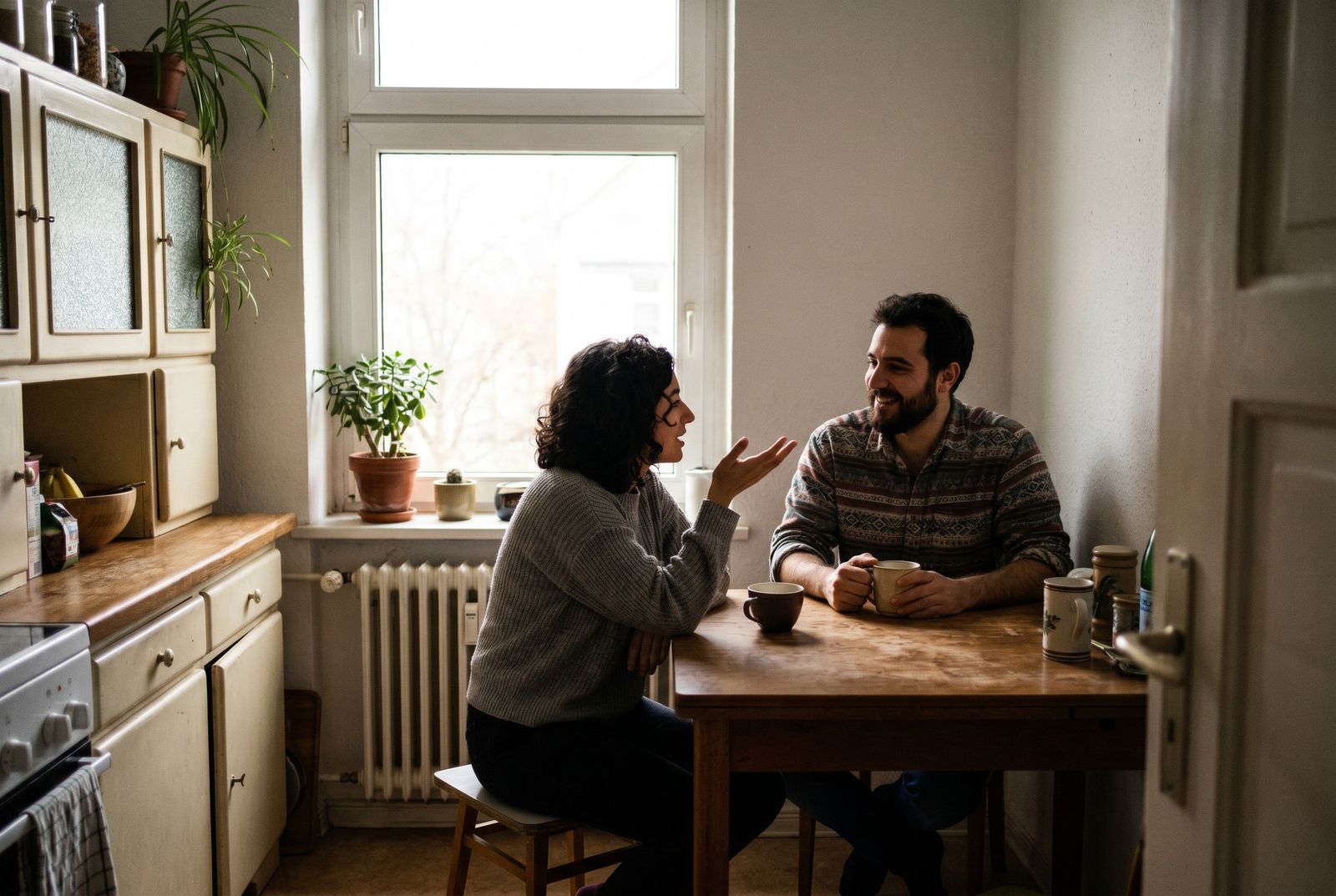
Albanian-German relationships work, and more often and less dramatically than the clichés suggest. The biggest differences rarely sit between the two people themselves. They sit in everything around them: the role of the family, how celebrations are handled, language, and sometimes religion. Couples who know these topics and raise them early, rather than waiting them out, have a much easier time. This article describes both sides honestly, the genuine upsides and the real friction.
Two everyday cultures meet
The first difference many couples notice has little to do with big values and a lot to do with daily life. In many German-shaped households, independence is prized early: your own apartment, a clear schedule, a weekend that sometimes belongs only to you. In many Albanian families, closeness is the default. People call more often, they drop by unannounced, and the parents' door tends to stay open.
Neither attitude is better. They simply collide in the details now and then. When your mother-in-law calls on Sunday to ask why you are not coming over for lunch, that is not an intrusion, it is connection in practice. Conversely, wanting an evening to yourself is not a rejection of the family, it is a different way of living a relationship. Couples who translate this early spare themselves a lot of quiet disappointment.
Family is rarely just a private affair
This is the point German partners underestimate most often. In Albanian culture, a serious relationship is usually a family matter too. You are introduced not only to your partner but to a circle: parents, siblings, often uncles, aunts and cousins. The first official meeting carries weight, and it is worth taking seriously. How it unfolds and what counts is covered in detail in meeting the Albanian family.
For many people this involvement feels like pressure at first. Over time, most come to experience it as support. In Albania and Kosovo you do not marry only a person, you become part of a network that holds you when things get hard. The price is that decisions are rarely made entirely alone. Knowing this, you can deliberately negotiate where the family has a say and where the couple decides for itself.
A practical note: respect toward the parents is the hardest currency there is. A gift on the first visit, sincere interest in the family's roots and holding back on quick judgments will do more than any perfect vocabulary.
Celebrations that make everything bigger
If you come from a smaller celebration culture, your first Albanian wedding often lands as culture shock in the best sense. Hundreds of guests, several days, live music, circle dances, gold jewelry, cash gifts. For the German half of the couple this can be overwhelming and, honestly, sometimes exhausting, and that is fair to say.
Friction usually appears in three places: the number of guests, the budget, and the question of whose traditions set the tone at your own celebration. The good news is that this is exactly where blending works well. Many couples celebrate twice, or combine a German-style civil ceremony with a large Albanian dasma. The key is talking about numbers and expectations early, because an Albanian wedding is rarely small, and that has to do with family honor and reciprocity, not with showing off.
| Topic | Common German expectation | Common Albanian expectation |
|---|---|---|
| Guest count | Close circle, often under 100 | Large celebration, often several hundred |
| Schedule | One day, tightly timed | Several occasions, engagement and wedding separate |
| Gifts | Wish list, often physical goods | Cash gifts, often gold |
| Music | Playlist and DJ | Live band, circle dance, late into the night |
This table reflects common experience, not rules. Every family is different, and in the diaspora many of these points shift anyway.
Language: even the attempt changes everything
German is often the couple's shared language day to day, especially if the Albanian partner grew up in Germany, Switzerland or Austria. Even so, Albanian is the key to the family. Parents and grandparents often speak little or no German, and that is exactly where a lot is decided.
You do not need to become fluent. But a few sentences of greeting, a thank you at the table and a term of endearment for your partner open hearts faster than any gift. It signals that you mean it and that you are making an effort. If you want to start, you will find a realistic entry point in learning Albanian for your partner. Here the attempt counts more than perfection, and most families reward it with visible joy.
Religion: clarify it early and honestly
Religion is the topic that gathers the most worry and that turns out, in practice, to be smaller than feared. Albanian culture is religiously diverse. There are Muslim, Catholic and Orthodox families, and many live their faith culturally rather than strictly. The well-known line that the religion of Albanians is Albanianism describes a real underlying attitude, even if it does not hold for every family.
For Albanian-German couples this usually means that conversion is rarely required, but respect for background and holidays is expected. Concretely, it helps to settle three questions early. How are holidays observed in the family. How should any children be raised. And are there religious expectations around the wedding. These conversations feel heavy, but they are easier when they happen early and without pressure, rather than under time pressure just before the wedding.
Children and parenting: two values in one family
When children arrive, the two everyday cultures meet most clearly. How much closeness to the grandparents. Will the child grow up bilingual. Which holidays get celebrated. How much independence counts as healthy, and how much connection to the family.
Most couples report that this is exactly where the best of both worlds comes together, if you let it. A child who speaks German and Albanian, who knows the calm of German weekends as well as the loud, warm family celebrations, grows up richer, not poorer. Bilingualism is a gift, not a problem. The condition is that both sides see the other's culture not as a threat but as part of what the child gets to inherit.
What helps, and what hurts
Drawing on what couples in these relationships tend to describe, a few patterns stand out. They are not a guarantee, but a good compass.
- Raise expectations early, especially about family, celebrations, religion and children. Postponed topics do not get smaller.
- Take your partner's family seriously, even if their closeness feels foreign to you. Rejecting the family is almost always read as rejecting the partner.
- Learn a few sentences of Albanian. The effort is small, the effect is large.
- Do not judge traditions you do not yet understand. Ask before you evaluate.
- Do not ask your partner to choose between you and the family. In this culture that choice usually does not exist, and demanding it damages both.
The reverse applies to the Albanian half of the couple: explain rather than assume. Much of what is obvious to you is new to your partner. One sentence of explanation before the first family celebration saves both of you a lot of uncertainty.
Upsides that are easy to overlook
With all the friction, it is easy to lose sight of how much an Albanian-German relationship can give. Two languages in daily life. A second country that becomes a second home over time. A family that, at its best, offers support you rarely have on your own. And the experience of seeing your own routine through fresh eyes, because someone stands beside you who does not take it for granted.
Many people in the diaspora deliberately look for a partner with shared roots because a lot is easier that way. The article on why many Albanians marry Albanians explains this without dismissing other paths. An Albanian-German relationship takes the other path on purpose, and it can be just as sustainable when both are willing to learn their way into the other's world. If you are already thinking about marriage, you will find the formal side outlined in a binational marriage in Germany.
embla is the dating app for Albanians worldwide, and for everyone looking for a relationship with Albanian roots. Whether two backgrounds or one shared one, it comes down to people who want to understand each other. The app launches soon, and the waitlist is open.
Frequently asked questions
Do Albanian-German relationships work?
Yes, many work very well. What matters is less the background and more the willingness to get to know the partner's family and celebrations, and to raise expectations early. Friction shows up around family roles, weddings and sometimes religion, but none of these is a dealbreaker.
How important is family in an Albanian relationship?
Very important. In many Albanian families a serious relationship is rarely a purely private matter, the family gets involved early and parents play a large role. This can feel like closeness or like pressure. If you understand it and take the family seriously, you start with a real advantage.
Do I have to convert to Islam as a German partner?
Usually not. Many Albanians live their faith culturally rather than strictly, and conversion is rarely required. What matters more is respecting the family's background and holidays. Clarify the topic early and honestly instead of postponing it.
Should I learn Albanian for my partner?
You do not need to become fluent, but a few sentences open doors, especially with the parents. A greeting, a thank you and a couple of terms of endearment show respect and seriousness. The effort often counts more than perfect pronunciation.
Ready for a spark instead of a thousand swipes?
Join the free waitlist and secure 6 months of embla+ free.
Save my spot