Weddings
Binational Marriage in Germany: Marrying Albanian-German
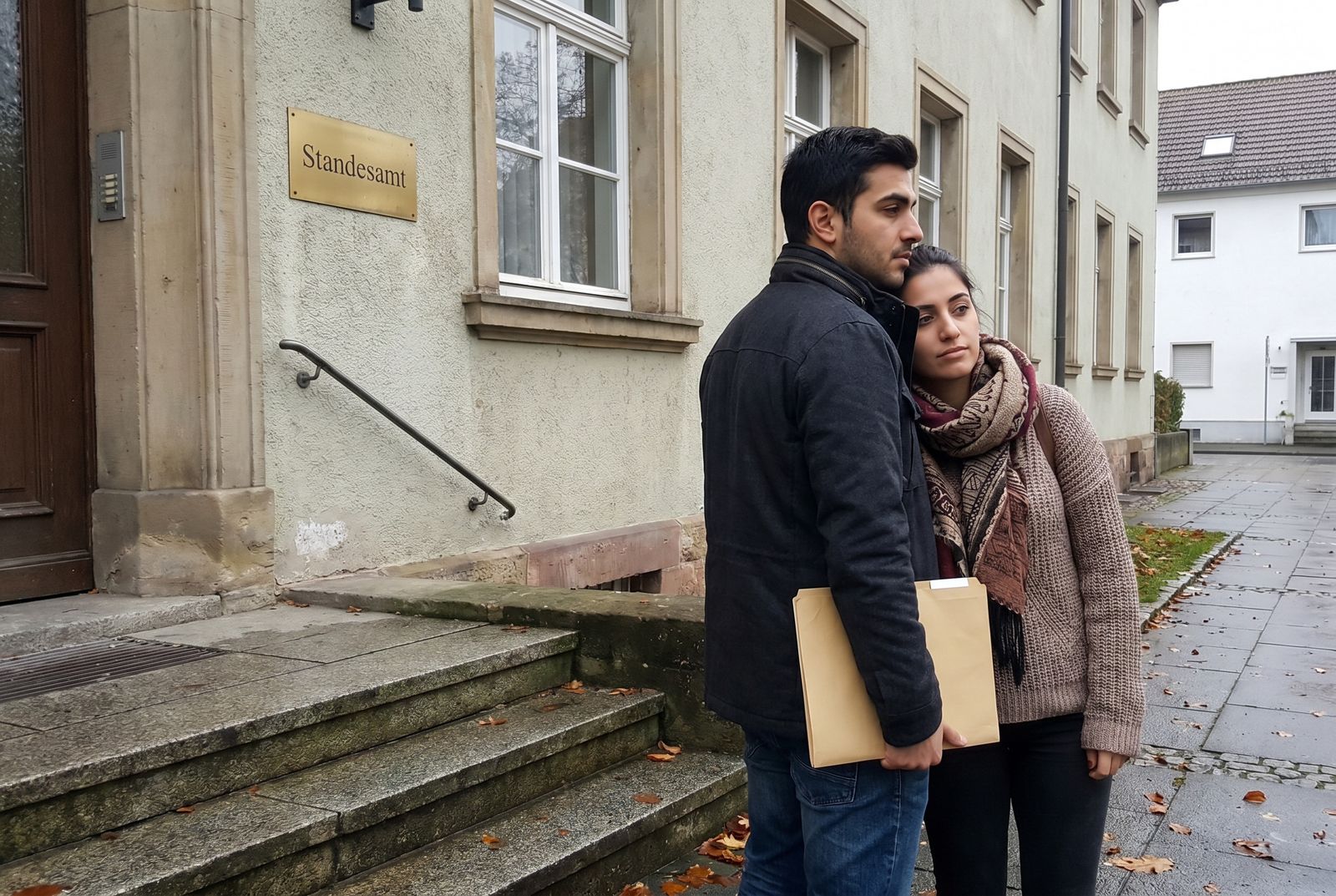
An Albanian-German marriage in Germany rarely fails because of love and often because of a folder of paperwork. If you want to marry here and your partner is from Kosovo or Albania, you mainly need three things: the right documents from the home country, certified and translated, proof of eligibility to marry or a substitute for it, and some patience with the registry office. The big dasma, the Albanian wedding with three hundred guests, comes later. This piece maps out the path. It is orientation, not a substitute for binding information from a registry office or embassy.
Two ceremonies, one marriage
For many Albanian-German couples there are two dates in the end, and they feel like two different worlds. One is sober: a room in the Standesamt, two witnesses, a signature, maybe a bouquet on the desk. The other is the dasma, the Albanian wedding, loud and stretched over days, with live music, valle circle dancing and a guest list nobody fully keeps track of.
Legally, only the first date counts. The marriage comes into being before the registrar. The dasma is the celebration the families throw, and for most people it is the emotional heart of the wedding. It helps to separate the two early. The registry office needs paper and appointments, the family needs a date and a hall. Mix them up and stress follows. If you want to know how such a celebration actually unfolds, the overview of the Albanian wedding covers it in detail.
The papers the registry office wants to see
The bureaucratic side of a binational marriage almost always turns on the same question: are both people single and free to marry? For the German side that is usually straightforward. For the side from Kosovo or Albania you need documents that German authorities will accept.
In practice it comes down to three kinds of paper. A recent birth certificate. Proof of marital status, meaning evidence that the person is single, divorced or widowed. And often a registration or residence record. Old certificates from a drawer rarely do the job. Registry offices generally want fresh copies, frequently no older than six months.
Apostille and translation
For a Kosovar or Albanian document to be valid in Germany, its authenticity has to be confirmed. The usual route is the apostille, a stamp that certifies a document for international use. Kosovo and Albania issue apostilles, and in many cases that is exactly what the German registry office expects. After that, a certified translator recognised in Germany translates the document into German.
That sounds like two steps, but it is the point where most timelines slip. Getting fresh certificates issued, obtaining the apostille, having everything translated, possibly from a distance or through relatives on the ground: all of it takes time. Underestimate this block and the wedding date moves after all. Reliable information on legalisation and apostilles is available from the German Federal Foreign Office and from the relevant embassy.
Certificate of no impediment: Kosovo and Albania as a special case
German law generally requires the foreign spouse to present a certificate of no impediment, a Ehefähigkeitszeugnis. It is a document from the home state confirming that nothing stands in the way of the marriage under that country's law. The snag is that Kosovo and Albania do not always issue such a certificate in the form German registry offices know.
When no suitable certificate exists, there is an established workaround. The president of the competent Higher Regional Court can grant an exemption from the requirement. The couple submits the documents they have, the court reviews them, and at the end there is the exemption that clears the way to marry. This step is routine for the offices, but it costs time again. Which route applies in your case is decided solely by your registry office. Do not rely on stories from friends, because responsibilities and requirements differ from place to place.
Documents at a glance
The overview below reflects common experience, not an official checklist. It helps with gathering, but it does not replace the conversation with the registry office, which decides for you what is actually needed.
| Document | For whom | Note |
|---|---|---|
| Valid passport or ID card | both | original and copy |
| Recent birth certificate | both | from the home country often with apostille and translation |
| Proof of marital status | mainly the Kosovo/Albania side | single, divorced or widowed |
| Registration certificate | both | current address |
| Certificate of no impediment or exemption | Kosovo/Albania side | exemption via the Higher Regional Court if no certificate is possible |
| For a prior marriage: final divorce decree | person concerned | recognised or with recognition |
| For children: children's birth certificates | person concerned | for custody and name questions |
All foreign-language documents generally need a certified German translation. Ask the registry office whether it keeps a list of recognised translators.
Name law: who is called what in the end
Names get personal, and many couples have no idea how much room they have. German law knows several paths. You can choose a shared married name, either his or hers. You can both keep your existing names. And one person can carry a double name, the married name plus their own.
A binational marriage adds a twist. For the foreign spouse, the law of the home country can also apply, and Albanian naming conventions differ from German ones. That is not an obstacle, just a reason not to decide the matter in passing. Raise the name question openly when you register. The registrars will explain which combinations are possible in your case and what it means later for passports, papers and any children.
What does a binational marriage cost?
An honest answer first: there are no fixed prices, because every German federal state, and often every municipality, sets its own fees. Still, a rough orientation helps. Registering the marriage at the Standesamt usually costs more for a binational couple than for two German partners, because foreign law has to be examined. For the registration and the ceremony together, reckon on an amount in the low to mid three figures.
On top of that come the costs for the papers from the home country. Certified translations are billed per document, as are the apostilles that have to be obtained in Kosovo or Albania. Here too, depending on the number of documents, you are looking at the low three figures. If an exemption from the certificate of no impediment through the Higher Regional Court is needed, a further fee applies, often based on the couple's income. Only your registry office can give you binding amounts. Treat the figures here as an order of magnitude, not an invoice, because fees are adjusted regularly.
Residence and family reunification after the wedding
A common misunderstanding first: the wedding alone does not grant a right of residence. If you want to bring your partner from Kosovo or Albania to Germany, you usually go the route of spousal reunification. That runs through a family reunification visa, which the person applies for at the competent German embassy in the home country, before they enter Germany.
Certain conditions apply to reunification. As a rule, proof of basic German at level A1 is required, usually through a recognised language certificate. Depending on the case, a secured livelihood and adequate housing are added. After entry, the local foreigners' authority (Ausländerbehörde) issues the residence permit.
Plan realistically for processing times. Several months can pass between the application and the visa, depending on the demand at the embassy and how complete the documents are. That is normal and no cause for worry, only a reason to start early. The governing rules change from time to time. Binding and up-to-date information comes from the competent foreigners' authority, the German embassy and the Federal Foreign Office. This section is a first orientation, not legal advice.
Planning the sequence
An Albanian-German wedding is usually a project spanning months, because two systems come together: the office here and the family there. A proven sequence looks like this.
- Ask the registry office early which documents are specifically required. That answer is the starting gun, everything else hangs on it.
- Obtain the certificates in Kosovo or Albania, get the apostille and have them translated. This is the slowest step, so start it first.
- If needed, apply for the exemption through the Higher Regional Court.
- Register the marriage at the registry office and secure a date.
- Only then commit to a date for the dasma and plan the hall, the music and the guest list.
Many diaspora couples deliberately put the big celebration in the summer, when half of Europe is travelling home anyway. Some marry at the German registry office and hold the dasma in Kosovo. If you are weighing that route, the guide to getting married in Kosovo covers the practical side, from recognition to the summer calendar.
When two families hold two pictures of a wedding
The paperwork is one thing. The other is that a binational marriage brings together two ideas of celebrating, of guests and of how a day should run. On one side, perhaps a modest German celebration with family and close friends. On the other, the Albanian expectation that a wedding is big, that uncles, aunts and half a village belong, and that hospitality is on full display.
Both are right, and both can be combined if you talk early. It helps to explain to the German relatives why the dasma is so large and what a cash gift means. And it helps to show the Albanian side that a smaller celebration is not disrespect but a different style. A couple that stands together here takes away each family's fear of being short-changed. For more on these friction points and how couples resolve them, see the piece on the Albanian-German intercultural relationship.
Common stumbling blocks
- Starting too late. Getting documents from abroad almost always takes longer than expected.
- Outdated documents. Registry offices want current copies, not old originals.
- Translation from the wrong source. Only certified translations by recognised translators are accepted.
- Trusting hearsay. What worked for a cousin in another city may not apply at your registry office.
- Fixing the celebration date too early. Authority first, then the hall. The other way round creates needless pressure.
None of this is cause for worry. Albanian-German marriages are concluded every month and the path is well worn. You just have to walk it early and ask the right places: the registry office, the embassy, and if in doubt the Federal Foreign Office.
And before all of it comes the meeting
Before anyone thinks about apostilles and married names, there is the beginning: two people who fit and who speak the same language, literally and otherwise. For many in the diaspora, that is where the real search starts.
embla is the dating app for Albanians around the world, for everyone looking for a partner with the same roots, without having to explain from scratch what dasma, besa or the family's Sunday phone calls mean. A like on embla is called a "Spark" and is always blank, with no text. It never applies to a whole profile either, only to one concrete sentence or photo. Anyone who wants to say more answers what the other person wrote, and that answer lands straight in the chat. The app launches soon, and the waitlist is open.
Frequently asked questions
Do you need a certificate of no impediment for an Albanian-German marriage in Germany?
As a rule, the German registry office asks the partner from Kosovo or Albania to prove there is no legal barrier to the marriage. Because neither country always issues such a certificate in the form Germany expects, the process often runs through an exemption granted by the president of the competent Higher Regional Court. Only your registry office can tell you which route applies to you.
Which documents from Kosovo do you need to marry in Germany?
Typically a recent birth certificate, proof of marital status and a registration or residence record. These documents usually need an apostille and a certified German translation. The exact list depends on your case and is set by the registry office.
Do you have to marry both in Germany and in Kosovo?
No. A marriage concluded in Germany is valid. If you also want it recorded in Kosovo or Albania, you can register the German marriage certificate there afterwards. That is a matter of recognition, not a second wedding.
Can my partner take my surname in a binational marriage?
Yes. German name law allows, among other options, a shared married name, keeping both existing names, or a double name. Because the foreign spouse's home-country law can also apply, it is best to sort out the options directly with the registry office when you register the marriage.
How long does it take to register a binational marriage in Germany?
No honest fixed timeline exists, because much depends on obtaining the documents and any exemption. Plan generously and start collecting the papers early rather than locking in a wedding date under pressure.
Ready for a spark instead of a thousand swipes?
Join the free waitlist and secure 6 months of embla+ free.
Save my spot