Weddings
Getting Married in Kosovo: A Diaspora Guide
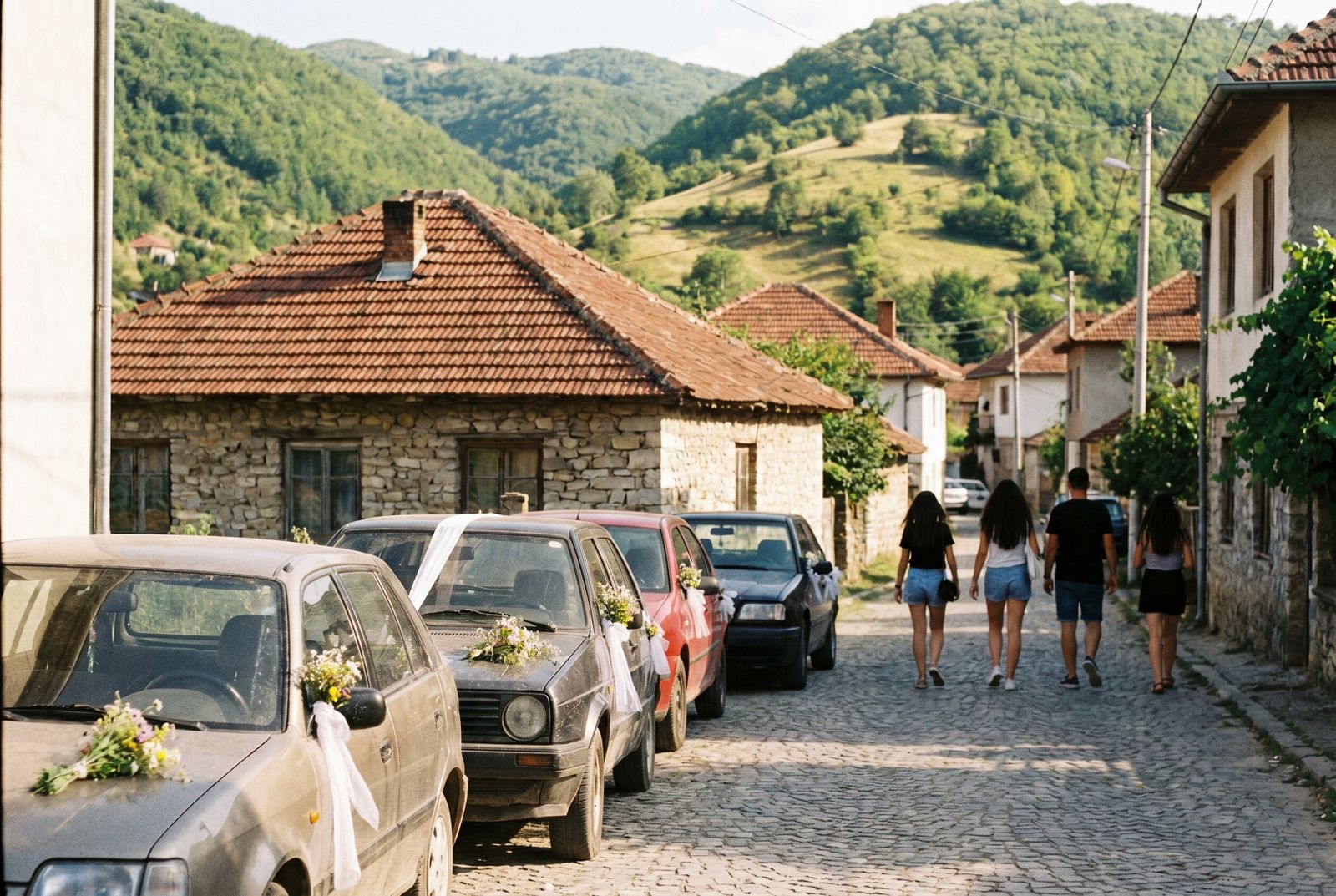
If you grew up in the diaspora and want to marry in Kosovo, you are really running two systems at once: the registry office where you live and the komuna in your family's hometown. Here is the reassuring part up front. It is very doable, and thousands of couples do it every summer. Treat this article as orientation, not legal advice. What actually binds you comes from the registry office in Kosovo, the registry office where you live and the relevant embassy. Rules change, and every case has its quirks.
Why so many diaspora couples marry in Kosovo
For many people this is not a question of logistics but of feeling. The grandmother who no longer flies. The uncle who never leaves the village. The family courtyard where their parents once celebrated. If you live in Germany, Switzerland or Austria, a wedding in Kosovo gathers the people who would otherwise never be in one room together.
Then there is the practical side. A large dasma with three hundred guests is more affordable in Kosovo than in Frankfurt or Zurich, and the whole ecosystem is built for it: halls, live bands, photographers, patisseries, all tuned to Albanian weddings. For how that lands in your budget, see our detailed breakdown in Albanian wedding cost.
And then there is summer. From July into August, Kosovo turns into one long family reunion, with number plates from Stuttgart, Basel and Vienna parked outside every café. We describe that phenomenon, and the relationships it sparks, in diaspora summer romance.
The difference between the party and the paperwork
One distinction gets lost in the excitement: the Albanian wedding that everyone simply calls "the wedding" is the celebration. Legally, you are married only once the civil ceremony has taken place, and that is a separate act.
Many diaspora couples solve this in two steps. The official part, the registry office, happens either at home before the trip or in Kosovo at the komuna. The big party then takes place in summer in the family town. Some do everything in Kosovo across one weekend; others deliberately split the paperwork from the party so nobody has to rush between the ceremony and the family feast on the day itself.
Which route makes sense for you depends heavily on where you live, which citizenships are involved and whether one of you is not a Kosovo national. For German-Albanian setups, it is worth a closer look at binational marriage in Germany, because additional documents come into play there.
Alongside the civil ceremony, many families still hold a religious one, Muslim or Catholic depending on the region and the household. In almost all cases it does not count legally as the marriage; it is the spiritual part. If you want both, talk to the families early about the order and the day, so the registry office, the place of worship and the party do not clash. Some place the religious ceremony on the same day as the dasma, others bring it forward.
What does a wedding in Kosovo cost?
The same split that helps with the timeline helps with the money. The administrative part is modest: the fees for the ceremony at the komuna, plus certificates, authentications and translations, run into the low hundreds at most, even with every document in hand. The big item is the celebration. The hall, the live band, food for several hundred guests, the dresses and the gold quickly add up to a multiple of the administrative cost, even though a dasma in Kosovo comes in far cheaper than one in Germany or Switzerland. Budget the two separately. For what the celebration realistically costs and where you can save, see the detailed breakdown in the cost of an Albanian wedding.
Who marries where: the most common routes
In practice a few patterns emerge that you can orient yourself by.
- Both civil at home, party in Kosovo. The administrative part is done before the trip begins, and summer is only for celebrating. Calm and predictable, but the papers have to be in order early.
- Everything in Kosovo over one weekend. Ceremony at the komuna on Friday, dasma on Saturday. Compact and full of atmosphere, but it requires all documents to be recognised in Kosovo in time.
- Separate dates, both in Kosovo. The registry office in a quiet month, the big party in summer. Popular with couples who want the day of the feast entirely for the feast.
None of these is the correct one. It hangs on your papers, where you live and how much you want to carry in a single day.
Documents: the usual starting point
Authorities in Kosovo and abroad each ask for their own papers, and lists differ from one municipality to the next. Read the table below as a starting point for the conversation with the registry office, not as a final checklist.
| Document | What it is for | Note |
|---|---|---|
| Valid passport or ID | Identity of both partners | With dual citizenship, bring both passports |
| Birth certificate | Core personal data, often required recent | A newer copy is frequently asked for, not the old 1995 original |
| Proof of marital status / single status certificate | Evidence there is no existing marriage | Validity is often time-limited |
| Certificate of capacity to marry | Often needed for people living abroad | Issued via the registry office where you live |
| Authentication / legalisation | So documents are recognised across the border | Confirm the exact form in advance |
| Certified translation | Foreign certificates for Kosovo, Kosovo ones for home | By sworn translators |
An honest word on authentication: a lot of half-truths circulate about the exact form in which Kosovo and foreign certificates are recognised for each other. This is precisely where you should not believe "what a cousin once heard." Ask your home registry office in writing which form of authentication it needs for your Kosovo papers, and ask the komuna the same about your foreign documents. These two enquiries save you the most trouble later.
Having the marriage recognised at home
A marriage lawfully concluded in Kosovo is generally treated as valid in countries like Germany, provided it came about correctly under Kosovo law and you present the certificate in an accepted, translated form. In practice that means bringing your Kosovo marriage certificate, properly authenticated and translated, to the registry office where you live.
Whether and how the marriage is additionally entered into a local register, and what follow-up steps apply for your surname or tax status, is decided by that registry office. Please rely on their information. What you read here does not replace it, and nobody online knows your specific case.
The summer wedding calendar
Kosovo has a very pronounced wedding season, and if you plan from afar it helps to know its rhythm.
- May to June: Calmer, pleasant weather, more choice of halls and musicians. Popular with couples who want to avoid the crush.
- July and August: Peak season. Half the diaspora is there, the atmosphere is unbeatable, but everything is booked early and costs more. If you want this window, people often lock in the hall and band a year ahead.
- September: Still warm, the rush eases, often an insider's choice. Many working people in Europe use their last holiday days.
- Winter: Rare for the big celebration, but fine for the pure paperwork run if you separate the party from the admin.
Expect good photographers, well-known live bands and the nicest halls to be the scarcest resources. They tend to go before the registry appointment does.
Planning from abroad: what actually helps
Pulling off a Kosovo wedding from Germany works if you sort a few things early.
- A trusted person on the ground. A parent, a sibling, an aunt who attends appointments, views halls and can nip to the komuna if needed. Without this person every small thing becomes a flight.
- Settle the document question early. Those two written enquiries to both registry offices belong at the start, not the end. Authentications and translations take time.
- Build in a travel buffer. Do not schedule the ceremony for your last day of holiday. Offices keep their own hours, and summer is busy.
- Think in two currencies. Some costs fall in euro, others locally. Keep a buffer for things that are hard to judge from a distance.
- Align the guest list and expectations. In Kosovo the guest count is often larger than diaspora couples expect. Talk to both families early about who is invited and who carries which part.
If you like, split the admin from the party on purpose: a small, earlier civil ceremony, then the big feast in summer without time pressure. That split takes a lot of stress out of the actual day.
Common pitfalls
A few things come up again and again at diaspora weddings. The single status certificate is sometimes valid only for a limited period, and getting it too early can leave you at the appointment with an expired paper. Translations must come from sworn translators; a quick favour translation will not be accepted. And the form of authentication tends to be underestimated. Sort it first, because everything else hangs on it.
If one partner does not hold Kosovo citizenship, further documents are added and the route through the home registry office becomes more important. Here too the rule holds: ask, do not guess.
One last thing that often slips through: names. Kosovo and foreign certificates sometimes carry small discrepancies, a missing accent, a different spelling of the father's name, a birthplace with two names. Such details can cost time at the counter. Check the spellings on every paper before you have them authenticated and translated, and flag any mismatch early rather than being caught out at the appointment.
In short
Marrying in Kosovo means, for diaspora couples, bringing two administrative worlds and one big family celebration under one roof. Separate the party from the ceremony in your mind, settle the document question early and in writing with both registry offices, plan around the summer season and line up a reliable person on the ground. And once more, because it matters: this guide is orientation. The last word belongs to the registry office and the embassy.
At the very beginning of all this, though, is not the registry office but the person. Two people from the diaspora who share the same roots, the same summers and often the same longing to be understood have to find each other first. That is exactly what embla is for, the dating app for Albanians around the world. The app launches soon, and the waitlist is open.
Frequently asked questions
Can a diaspora couple get legally married in Kosovo?
Yes. The civil ceremony takes place at the municipality (komuna), usually where one of you is registered or where your family lives. Couples who live abroad can marry in Kosovo as long as the required documents are complete. Confirm the exact procedure and the currently accepted papers directly with the relevant municipal registry office.
Will a marriage performed in Kosovo be recognised abroad?
A marriage lawfully performed in Kosovo is generally recognised in countries like Germany, provided it is valid under Kosovo law and the certificate is properly authenticated and translated. The specific requirements for authentication and registration come from the registry office where you live. Ask them in writing rather than relying on what someone heard.
What documents do you need to marry in Kosovo?
Typically a valid ID or passport, a recent birth certificate, proof of marital status (a certificate of no impediment or single status) and, depending on your case, further papers. People living abroad often need a certificate of capacity to marry. Because municipalities and cases differ, have the exact list confirmed by both the Kosovo registry office and the registry office where you live.
When is the best time to get married in Kosovo?
The classic season is summer, above all July and August, when the diaspora travels home. Family and friends are around, but halls, musicians and photographers are booked out early. For a calmer day and more choice, couples move to late spring or September.
How far in advance should you plan a Kosovo wedding from abroad?
Plan close to a year ahead from the diaspora, especially for a summer date. The administrative part is often faster than the celebration, but documents, authentications and translations need a buffer. Start early rather than chasing appointments at the end.
Ready for a spark instead of a thousand swipes?
Join the free waitlist and secure 6 months of embla+ free.
Save my spot