Weddings
Albanian Wedding Cost: €15,000 to €40,000 Breakdown
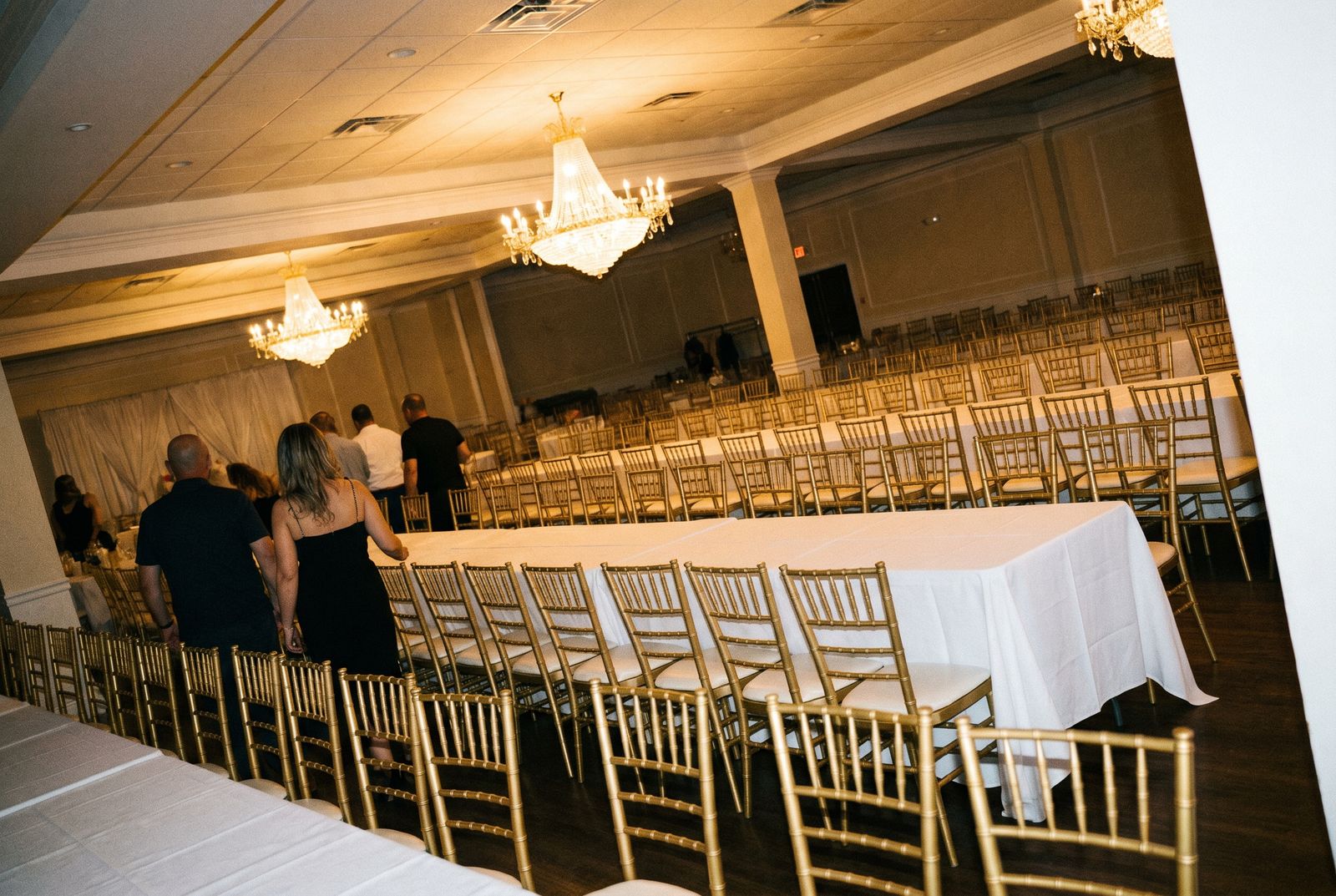
As a rough orientation, many Albanian weddings in the diaspora land somewhere between 15,000 and 40,000 euros, and often well below that back home. The biggest driver is not luxury, it is the guest count: three to six hundred people is nothing unusual. A good part of the money returns through the money gifts guests bring, which is why the final tally is usually gentler than the gross figures suggest. The ranges below are experience-based numbers gathered from the community, not fixed prices, and they swing widely with location, year and family.
Why a dasma is so big
To understand the cost, you first have to understand why a dasma, the Albanian wedding, is celebrated on such a scale in the first place. It is rarely about showing off. It is about belonging. When someone marries, they invite not just close friends but the entire extended family, their parents' neighbours, old acquaintances from the home village, colleagues, the cousins of cousins. Leaving someone out can be read as an insult. This logic of reciprocity carries over years: whoever's wedding you attended will one day attend yours, or their child's.
There is also the idea of family honour. A wedding is the moment two families come together in front of the whole community. You want to host your guests well, to send them home full and given a warm memory. That is not empty pride but lived hospitality, something that sits deep in the Albanian sense of self. Once you know this background, it also becomes clear why certain things are never cut back, even when the maths would allow it.
The good news: big does not automatically mean a loss. At a classic celebration almost every guest brings a money gift, and with several hundred guests that adds up. Many couples count on covering a substantial part of the hall and catering this way. It is never guaranteed, but it explains why families take on celebrations that look enormous on paper.
The main cost blocks at a glance
An Albanian wedding is built from a few large items and many small ones. The table below shows the typical blocks with ranges. To be clear again: these are experience-based figures from conversations across the diaspora and in Kosovo, not quotes. In German, Swiss or Austrian halls almost everything sits at the upper end, while in Kosovo and Albania it is often a fraction.
| Cost block | Diaspora (experience value) | Home country (experience value) |
|---|---|---|
| Hall including food and drinks (per guest) | 60–120 € | 15–40 € |
| Live band or singer for the evening | 2,000–6,000 € | 800–2,500 € |
| Bridal outfit(s), often two or three | 1,500–5,000 € | 600–2,500 € |
| Groom's suit | 400–1,500 € | 250–800 € |
| Gold jewellery for the bride | 2,000–8,000 € | 2,000–8,000 € |
| Video and photography | 1,500–4,000 € | 600–1,800 € |
| Decoration, flowers, car | 800–3,000 € | 400–1,500 € |
| Hair, make-up, nails | 300–800 € | 150–400 € |
Multiply these figures by the guest count and you see immediately where the real weight sits. At 400 guests and 90 euros a head, the hall and food alone come to around 36,000 euros. Everything else combined often weighs less than that single item. This is why the first and most important lever is almost always the length of the guest list.
The hall and the food
The hall is the heart of it and the biggest chunk. In the diaspora, families book large event halls set up for Albanian weddings, with a stage for the band, room for the circle dance and a kitchen that can turn out several hundred plates. It is usually priced per guest, including a multi-course menu, drinks and service. This is exactly where the budget is decided: every extra table costs real money.
Back home the same evening is far cheaper, because wages, food and rent are lower. That is one reason many diaspora couples consider celebrating in Kosovo or Albania. If the idea appeals to you, our piece on getting married in Kosovo covers the practical points, from documents to the summer calendar of the wedding season.
Music is not a luxury, it is the core
Cutting back on music is the hardest thing for many families, and for good reason. The live band is not a side dish, it is the emotional engine of the evening. It keeps the valle, the circle dance, moving, it calls up the families one by one, it reads the mood of the room. A well-known singer costs accordingly, especially in the summer high season when everyone wants to marry at once.
If you do want to save here, do it cleverly. A smaller ensemble instead of the biggest names, a DJ for the late hours after the live set, or a date outside the fully booked July and August weekends all lower the fee noticeably. The celebration loses none of its warmth as long as people are dancing.
Gold: jewellery and security at once
The bride's gold is a category of its own, because it is meant to be more than beautiful. Traditionally the groom's family gives the bride a set of necklace, earrings, bracelet and ring. Gold is seen as security, something that belongs to the bride alone and holds its value in hard times. That is why it is rarely skimped on, however large or small the rest of the celebration turns out.
Exactly how much varies strongly by family and region. Some give a single but high-quality set, others accumulate several pieces. Worth knowing: the gold price fluctuates, and the material value makes up most of the price. If you can plan flexibly, you can time the purchase for a period when the rate is more favourable. There is more on the symbolism of jewellery and dress in our piece on the Albanian bridal outfit.
Dress, images and the smaller items
With the dress, the trend is towards two or three outfits in one evening, for example a white gown and a traditional or more festive second look. That pushes the cost, but it is easy to manage: renting instead of buying often halves this item, and the second outfit can frequently come from a family piece or a loan.
Video and photography are the item couples value most afterwards, because it is what keeps the whole day. Here it pays not to chase the cheapest supplier but to trim the package size. One team instead of two, a shorter film instead of a three-hour documentary, that is enough for most. Decoration, the car, hair and make-up are the small items that still add up together. Asking and comparing for each one separately saves more across the total than it feels like it should.
Saving honestly, without disrespecting tradition
Saving is not taboo, as long as the dignity of the celebration is kept. The most effective levers are rarely the ones you see first.
- The guest list is king. Fifty fewer guests can mean several thousand euros less, depending on the hall. It is delicate, because no one should feel left out, but an honest conversation in both families about the inner circle is worth having.
- Celebrate in the home country. The same event often costs a fraction in Kosovo or Albania, and for many in the diaspora the home country is the emotionally truer place anyway.
- Choose the off-season. If you do not marry in July or August, you negotiate the hall and the band from a stronger position.
- Rent instead of buy where no one will miss it: the dress, the decoration, sometimes even the jewellery for the second outfit.
- Plan drinks and menu realistically. Not every course has to be opulent for guests to go home full and content.
What you should not touch is what the families' hearts are attached to: the music, the bride's gold, the hospitality at the table. Cut there and you save at the wrong end, risking exactly the bad feeling the whole celebration is meant to avoid. For how a wedding unfolds from the engagement to the last dance, and where costs arise along the way, see the full overview of the Albanian wedding.
In the end, count the gifts too
Look only at the gross cost and it is easy to be alarmed. The more honest calculation subtracts the money gifts that come in at a large celebration. With several hundred guests, that often covers a good part of the hall and catering. You cannot plan on it with certainty, and anyone budgeting tightly should never treat it as fixed income. But it explains why families take on celebrations that seem impossible at first glance. An Albanian wedding is, in the end, less an expense than a cycle that runs across generations.
Before the question of cost even arises, there is a far nicer question: with whom. embla is the dating app for Albanians around the world, for everyone looking for someone with the same roots and the same idea of family. The app launches soon, and the waiting list is open.
Frequently asked questions
How much does an Albanian wedding cost?
As a rough guide, many Albanian weddings in the diaspora fall between 15,000 and 40,000 euros, depending on the guest count and the location. In Kosovo or Albania itself it is often far cheaper, because the hall, the food and the music cost less. The number of guests moves the budget more than any amount of luxury.
Why are Albanian weddings so expensive?
The main reason is the guest list. Three to six hundred guests is normal, because the whole extended family and circle of friends is invited. Add a live band, several bridal outfits and gold jewellery. A large share of the cost, though, comes back through the money gifts guests bring.
How much gold does an Albanian bride receive?
It varies a lot and depends on the family and the region. A set of necklace, earrings, bracelet and ring from the groom's family is common, often worth several thousand euros. Some families give more, others deliberately less. Gold is seen as the bride's security, not just decoration.
Can you have an Albanian wedding on a smaller budget?
Yes. The most effective moves are a shorter guest list, celebrating in the home country rather than the diaspora, and marrying outside the summer high season. Renting a dress instead of buying and booking a smaller band also saves noticeably, without the celebration losing any of its warmth.
Ready for a spark instead of a thousand swipes?
Join the free waitlist and secure 6 months of embla+ free.
Save my spot