Weddings
Albanian Wedding: Traditions, Order of Events, Customs
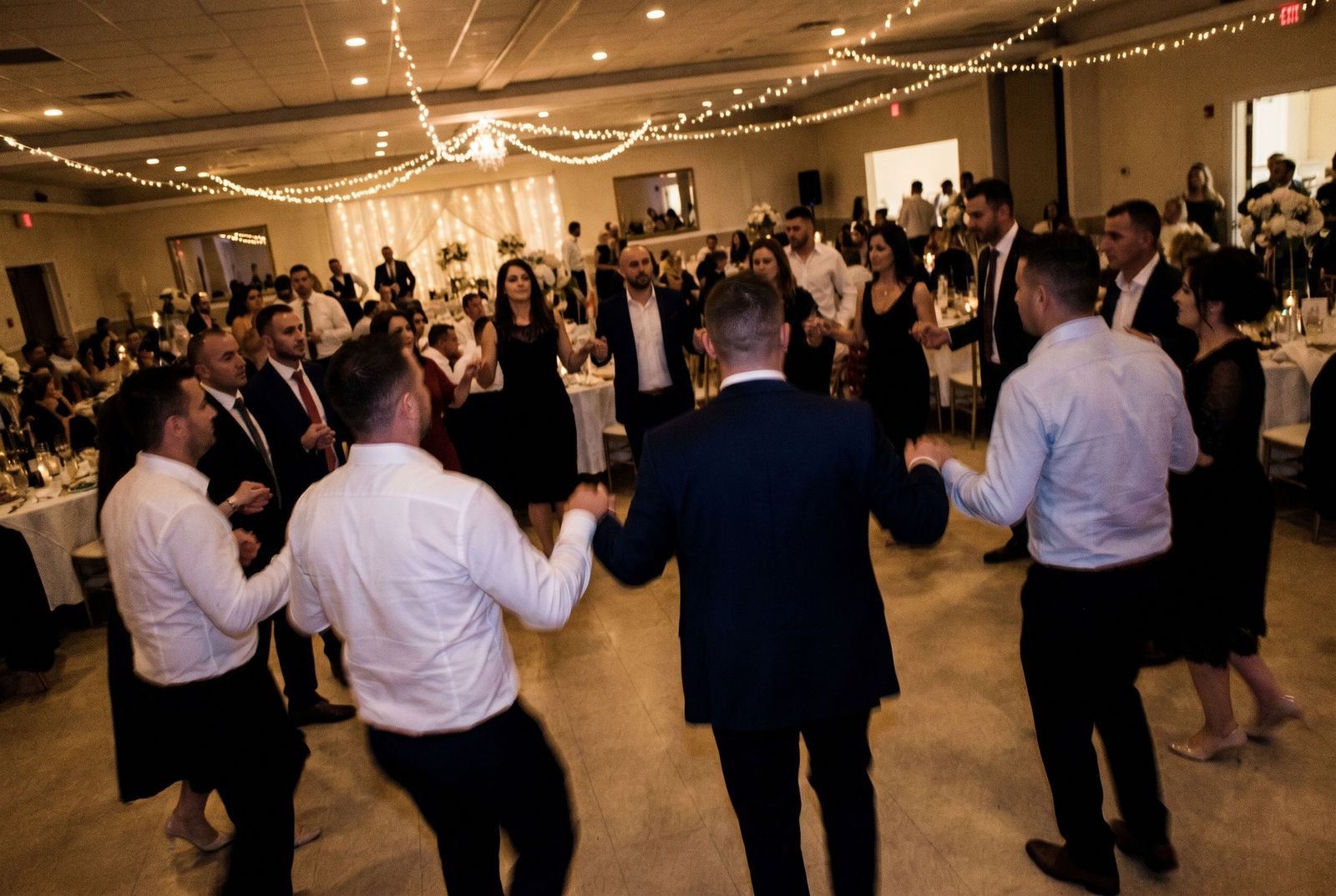
An Albanian wedding is rarely a matter of a few hours. It is a multi-day celebration of two families, with a set order of events, live music, hours of dancing, and rituals that are still kept up today. First-time guests are often struck by the sheer scale: several hundred people, a hall full of movement, and a bride who changes her dress more than once over the course of the night. This overview explains the typical order of events, what the families do, why music and money gifts matter so much, and how everything shifts between the homeland and the diaspora.
What does dasma mean?
The Albanian word for wedding is dasma. It refers not to the ceremony alone but to the entire celebration around it: the days of preparation, the music, the food, the dancing, and the small rituals that welcome the bride into her new family. Usually it is preceded by the engagement, the fejesa, where the families officially meet and the couple stands together in public. You can read how that plays out in the article on the Albanian engagement.
One thing is key to understanding all of it: two families marry, not just two people. That view explains almost everything about the day, from the guest count to the role of the parents.
The typical order of events over several days
Back home the celebration classically spreads across two or three days, with separate parties at the bride's family and the groom's. The overview below shows a common sequence. Regional variations exist, and no two families do everything the same way.
| Phase | What happens | Where / with whom |
|---|---|---|
| Preparation | Invitations, hall, dresses, gold, and music are arranged | Both families |
| Henna night (nata e kanës) | Women's gathering at the bride's home, henna is applied, plenty of singing | Bride's family |
| The groom's celebration | The groom celebrates with his side, often the biggest night of dancing | Groom's family |
| Collecting the bride (marrja e nuses) | The groom's family comes to fetch the bride, an emotional farewell to her parents' home | At the bride's parents' home |
| The main reception | Grand reception in the hall, the couple's entrance, dancing deep into the night | Rented hall or at home |
| The day after (e nesërmja) | Quieter visits, the bride settles into her new family | Home of the new family |
The henna night is still one of the most emotional moments. It is an evening among women, full of singing, tears, and laughter, while henna is placed on the bride's palm. Collecting the bride the next day is the turning point: the farewell to the parents' home is hard for many, and it is exactly that break that gives the moment its weight.
The role of the families
At an Albanian wedding the parents, uncles, aunts, and grandparents all have set roles. The groom's family traditionally carries the main weight of the celebration and receives the bride. The bride's family hosts its own party and accompanies the farewell. Older relatives are treated with respect, given the best seats, and greeted and invited to dance early in the evening.
This structure is not a rigid protocol but reciprocity in practice. Whoever is invited today invites in return tomorrow. That is why the guest list runs so long: it maps out a whole web of family and friendship built up over years.
Which individual rituals sit behind these roles, and how the tasks of the bride's and the groom's families are shared in detail, is covered at length in the article on the Albanian wedding customs.
Music and dance at the heart of it
A dasma is hard to imagine without live music. A band with a singer often plays for hours, and the music sets the rhythm of the whole night. The central dance is the valle, a line or circle dance where guests hold hands or a handkerchief and move together in a ring. You do not need to know the steps perfectly, joining in counts for more than elegance.
The dancing is also where money comes in. As the couple dances, banknotes are handed over, sometimes tossed into the air, sometimes placed directly in the hand. This is not showing off but a visible sign of support for the start of their life together. If you want to go deeper into the music, there is more in the article on Albanian wedding music and dances.
Money gifts and gold
The money gift is the norm at Albanian weddings. Instead of kitchen appliances or décor, you bring cash, usually in an envelope or during the dancing. The amount depends on how closely you are tied to the couple or the families. Close relatives often give considerably more, distant acquaintances less.
Gold plays a role of its own. The groom's family in particular gives the bride gold jewellery, which she wears that same evening. The gold is both a gift and a form of security, a value that belongs to her personally. What such gifts, the hall, the music, and the dresses can add up to is covered in the piece on the cost of an Albanian wedding.
Food and hospitality
Hospitality at a dasma is not a side matter but part of the family's honour. The table is set generously, often with several courses, and no one is meant to sit there hungry or with an empty glass. It runs from warm starters through meat dishes to sweets and coffee at the end. Anyone who has ever tried to say "no thank you" to an Albanian host knows that more will arrive whether you asked for it or not.
There is a reason for this abundance. A full table shows respect for the guests and pride in the family. Cutting corners on this night would be read as stinginess, not thrift. That is exactly why families invest so much in the hall, the buffet, and the drinks, even when the budget is tight. The celebration is a public statement about how seriously the family takes the event and the bond between the two families.
Regional variety
Not every Albanian wedding looks the same. Between Kosovo, Albania, and North Macedonia, and between individual regions and villages too, there are differences in music, dress, sequence, and particular customs. Some elements turn up almost everywhere, such as the valle and the money dance. Others are shaped locally, from specific songs to traditional costumes and small rituals during the collecting of the bride.
This variety is not a contradiction but a richness. There is no single "correct" Albanian wedding, only many versions of the same underlying idea. In the diaspora the traditions blend further, because relatives from different regions come together and couples combine elements of both their backgrounds. That is often where the most beautiful part lies: two family histories meet on one evening and become one.
Differences between home and the diaspora
Those who grew up in Germany, Switzerland, or Austria often experience the dasma in a condensed form. Instead of three days there is one big evening in a rented hall, with a band, a buffet, and several hundred guests. The core stays intact: the couple's entrance, the valle, the money dance, the bride's change of dress. But the frame adapts to everyday life between work, school, and limited holidays.
Many couples from the diaspora still celebrate back home, usually in summer. July and August are peak season, because that is when half the extended family returns from abroad. A wedding in Kosovo or Albania pulls together families that otherwise live scattered across several countries. For some couples the shared story actually begins during that very summer.
Modern developments
The dasma is changing without losing its core. Professional video teams, drone shots, and elaborately choreographed entrances have long been normal. Some couples cut the number of days, others openly debate the guest count, since large celebrations are expensive and exhausting. At the same time the emotional anchors endure: the henna night, the farewell to the parents' home, the first dance together.
What is interesting is how younger couples add their own accents. They mix the classic valle with modern music, plan more freely, and decide more for themselves without leaving the families out. Tradition and personal taste are not opposites, they are simply rebalanced.
Invited as a guest? What you should know
If you are invited to an Albanian wedding for the first time, especially as a non-Albanian, a little preparation helps. In short:
- A money gift is expected, not a physical present.
- The evening runs long, do not plan an early exit.
- Join the valle even if you do not know the steps.
- Dress festively, more elegant than casual.
- Greet the older guests and the couple's parents.
A detailed guide with dress code, money-gift conventions, and dance etiquette is available in the guest etiquette guide for Albanian weddings.
From the wedding back to meeting someone
Before the dasma is ever celebrated, there is always a first encounter. Two people find each other, often through family and friends, and increasingly online too. That is exactly where embla comes in. embla is the dating app for Albanians around the world, for everyone looking for a partner with the same roots. The app launches soon, and the waitlist is open.
Frequently asked questions
How long does an Albanian wedding last?
Traditionally an Albanian wedding stretches over several days. Back home, two or three days are common, with the henna night at the bride's home, the groom's family celebration, and the collecting of the bride. In the diaspora this is often condensed into one big evening or a single weekend.
What do you give at an Albanian wedding?
Money is the norm, usually in an envelope or handed over during the dancing. Close family often gives the bride gold jewellery. The amount depends on how closely you are related and how near you are to the couple.
Why are Albanian weddings so big?
A wedding is not a private couple's event but a celebration of two families. Invitations reach far beyond the closest circle because reciprocity matters: whoever celebrated with you gets invited in return. Several hundred guests is nothing unusual.
What is a dasma?
Dasma is the Albanian word for wedding and refers to the whole celebration, not just the ceremony. It includes the music, the dancing, the food, and the rituals around welcoming the bride into her new family.
How does an Albanian wedding in the diaspora differ from one back home?
In the diaspora the celebration usually takes place in a rented hall and is shorter, often a single evening rather than several days. Many couples still travel to Kosovo or Albania in summer to celebrate with the full circle of relatives.
Ready for a spark instead of a thousand swipes?
Join the free waitlist and secure 6 months of embla+ free.
Save my spot