Culture
Albanian Parents Reject Your Partner? What Helps
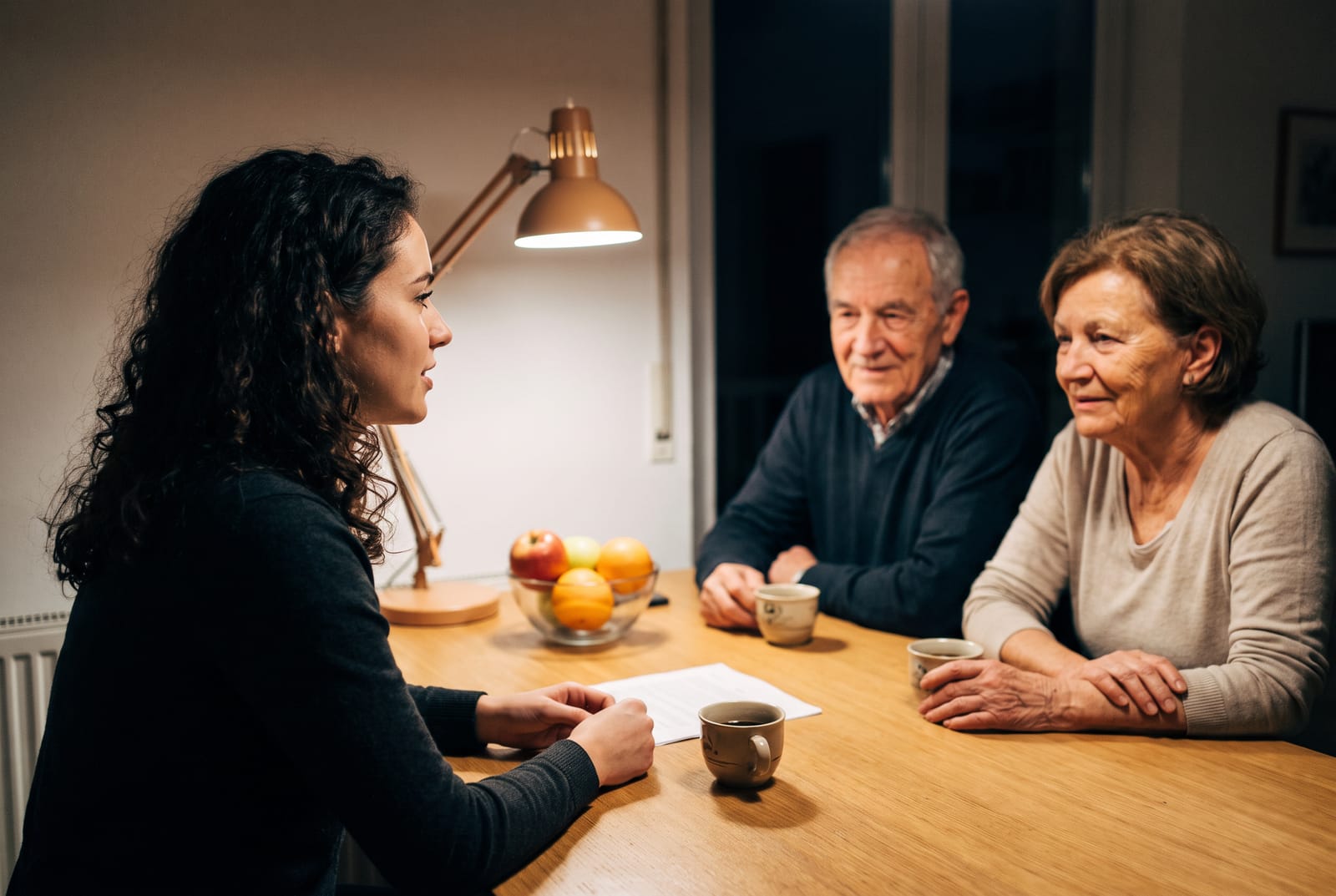
When your parents reject the person you love, it can feel like being asked to choose between two lives. In almost every case, you don't have to: the way through is not an ultimatum but a plan. First understand what actually bothers your parents, then prepare the conversation properly, win allies inside the family, and give everyone time to meet the human being behind the name. This guide walks through those steps one by one, written for everyone currently being ground down between the living room and their relationship.
First, understand: what is really bothering them?
"They don't accept him" sounds like one problem. It is almost always a bundle of several, and it pays to untie the bundle before you start arguing. The most common reasons, spoken out loud or not:
- No Albanian roots. The classic in the diaspora. Underneath sits the fear that the language, the celebrations and the connection to home will fade in the next generation. We unpacked how deep that expectation runs in Do Albanians have to marry Albanians?
- Religion. Depending on the family, the difference weighs heavily or not at all. Often it is less about theology and more about the practical questions: what will the wedding look like, how will the children be raised, which holidays count.
- Reputation in the community. What will the relatives say, the village, the families from the cultural association? From outside this pressure looks absurd. Inside, it is real.
- The partner's biography. A previous marriage, children from another relationship, a noticeable age gap. Topics where conservative parents hit the brakes first and ask questions later.
- Feeling bypassed. Sometimes the resistance is not about the partner at all but about how the parents found out. Whoever hides a relationship for years often pays that bill the day it comes out.
It is worth looking honestly in the other direction too. Are any of the objections not cultural but simply valid? Parents who reject a partner because he is disrespectful or unreliable are not a cultural problem; occasionally they are just the first ones to see clearly. Those cases are the minority, but they exist.
The most common mistake: the ultimatum
The impulse is understandable. You are hurt, you want to force a decision, so the sentence comes out: "Either you accept him, or you won't see me anymore." It almost never works. An ultimatum turns a family conversation into a power struggle, and in a power struggle nobody can yield without losing face. In many Albanian families that is precisely the point: nobody wants to stand in front of the extended family as the one who caved.
The same goes for the other direction. Parents who threaten to cut contact rarely mean it as finally as it sounds in the first wave of anger. Take such sentences seriously, but not as the last word. Between a family's first shock and its real position there are often months. The most valuable resource in this process is not the sharpest argument. It is patience.
The conversation, in five steps
No plan survives contact with one's own family unchanged. As a scaffold, this order has proven itself:
- Pick the moment. Not in passing, not at a family celebration, not mid-argument. A quiet afternoon, announced with one sentence: "I'd like to talk to you about something important." Framing the conversation seriously signals: this is not a test balloon, this is my life.
- Start with one parent. Most families have a more approachable address, often the mother, sometimes the father. Win one of them first and you enter the decisive conversation with an advocate already sitting at the table.
- Tell, don't defend. The difference is bigger than it sounds. Defending means reacting to objections. Telling means showing your parents the person they haven't met: what he does for a living, how he treats his own family, what he has already done for this relationship. Nothing calms parents like the feeling that their child is seen and well treated.
- Name their fears before they do. "I know you're worried the kids won't speak Albanian. We've talked about it, and this is our plan." Saying the objections out loud yourself takes the sting out of them and shows you understand your parents' perspective instead of waving it away.
- Ask for a meeting, not for approval. "Just meet him once, that's all I'm asking" is far easier to grant than "give us your blessing." Almost always, the first shared meal is the turning point, because the abstract problem becomes a person who politely asks whether he can help set the table.
Allies: the shortcut most people underestimate
Hardly any family conflict in Albanian households is settled between child and parents alone. There is always a wider circle, and that circle can be brought in. An older sister who knows the partner and vouches for him. An uncle whose judgment carries weight with your father. A grandmother who can move more over one lunch than the couple managed in a year.
Allies work for two reasons. First, they take pressure off the direct conversation: parents will voice doubts to an aunt that they would never show their own child. Second, they change the community math: once respected voices inside the family approve of the partner, the fear of gossip shrinks. So before the big conversation, sort quietly: who in the family is reachable, who is influential, and in which order do you talk to them?
When the partner is not Albanian
If your partner has no Albanian roots, persuasion comes with translation work, in both directions. Your parents need the assurance that you are not marrying out of the culture but bringing in someone who respects it. Your partner needs honest preparation for what awaits: direct questions, enormous amounts of food, and a family that examines first and embraces later.
Concretely: brief your partner before the first visit, practice a few words of Albanian together, explain the small gestures of politeness that matter. What that first visit looks like and what lands well is covered in detail in our guide to meeting the Albanian family. And for how mixed couples make everyday life between two cultures work long term, the piece on Albanian-German relationships draws on exactly this constellation.
One sentence on fairness: the non-Albanian partner's family has questions too, they just ask them more quietly. If you demand openness from both families, organize it in both directions.
If the rejection stays
Most families move. Some don't, or not within the time a relationship can survive. For that case there is no beautiful answer, only a few honest anchor points.
First: it is legitimate for an adult to stand by their partner, even against their parents' will. That is not a betrayal of the culture. Second: cutting contact does not have to be the goal; boundaries are often enough. You can stay loyal to your family and still make clear that insults against your partner will no longer pass without response. Third: leave the door open. Families who missed the wedding sometimes stand at the apartment door three years later because a grandchild was born. That path only exists if nobody nailed the door shut.
And fourth, most important: protect the relationship itself. A family conflict that drags on for months wears down even a strong couple if it swallows every dinner conversation. It helps to keep zones of everyday life deliberately free of the topic.
What parents need to hear before they can let go
In the end, almost all of these conversations come down to the same three messages, in whatever language they are said. One: I have not forgotten you, you remain my family. Two: this person treats me well, and I chose him with the same seriousness you raised me with. Three: you are not losing anything, you are gaining someone.
Parents who can believe those three sentences almost always give up their resistance, not overnight, but step by step. Because behind the rejection there is rarely a fixed conviction. There is fear, for their child and for what the family holds dear. Fear is not broken with force but with evidence, and the best evidence is a relationship that lasts, carries weight and invites the family in instead of shutting it out.
embla is the dating app for Albanians worldwide. If you want a partner your family will find easier to welcome from day one, you will meet people there who know both worlds. The app launches soon, and the waitlist is open.
Frequently asked questions
What should I do if my Albanian parents don't accept my partner?
Don't escalate, plan. Work out what exactly bothers them, prepare one calm conversation instead of many heated ones, bring respected relatives on board as allies, and push for a first meeting rather than for instant approval. Most families move once they see the relationship is serious and nobody is steamrolling them. Expect months, not days.
Why are Albanian parents against a non-Albanian partner?
It is rarely malice and usually fear: of losing language and culture in the next generation, of what the extended family will say, or simply of a person they have never met. Common triggers are missing Albanian roots, a different religion, a previous marriage, or the feeling of having been kept in the dark about the relationship.
Should I choose between my family and my partner?
Only as a last resort, never as an opening move. An early ultimatum turns a family conversation into a power struggle in which nobody can back down without losing face. Give both sides months of contact first. If the rejection truly never lifts, it is legitimate to stand by your partner and set boundaries while leaving the door open.
How long does it take for Albanian parents to accept a partner?
There is no fixed timeline, but a familiar pattern: first shock, then a mediation phase in which siblings and relatives soften the fronts, then a first meeting that defuses most fears. In many families, months to a few years pass between the first conversation and genuine acceptance. Engagements and grandchildren reliably speed things up.
Ready for a spark instead of a thousand swipes?
Join the free waitlist and secure 6 months of embla+ free.