Culture
Albanian Women: Stereotypes vs. the Reality
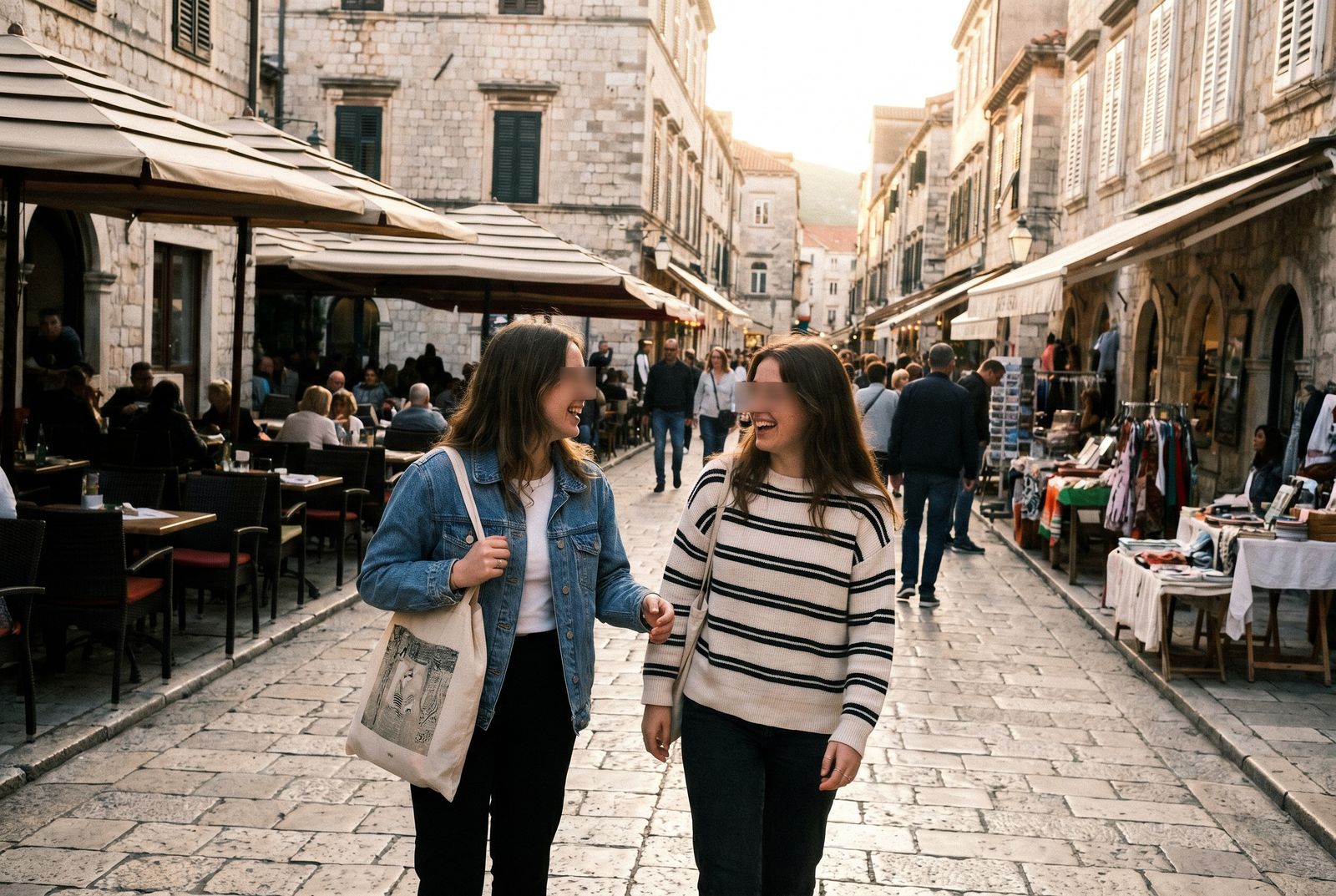
Search for "Albanian women" and you'll mostly find claims: about looks, about character, about supposed rules they live by. Most of it says more about the person writing it than about the millions of women it's meant to describe. This piece clears up the most common stereotypes and explains how to get to know someone with Albanian roots without starting from a prejudice.
Why "the Albanian woman" doesn't exist
Let's start with the core problem. Any sentence that begins with "Albanian women are..." is already wrong before it finishes. We're talking about millions of people spread across Kosovo, Albania, North Macedonia, Montenegro, and a large diaspora in Germany, Switzerland, Austria, Italy, Sweden, and the US. A student in Tirana waiting tables to pay for her design degree has little more in common with a tax advisor in Stuttgart than the language. And even that, they speak differently.
Stereotypes work because they're convenient. They save you the trouble of actually getting to know someone. Instead of asking who a person is, you reach for a ready-made template. The catch is that you never meet the person that way. You confuse her with an idea in your own head, and that idea disappoints sooner or later, because real people don't stick to it.
There's another problem: most of these images don't come from experience at all. They get passed along, from shows, from reels, from a friend of a friend's story. A stereotype needs no basis to survive. It only needs to be repeated often enough. That's exactly why it helps to take them out one by one and call them what they are.
The most common stereotypes and what's actually behind them
It's worth looking at the most widespread ideas openly rather than carrying them along unspoken.
"They're submissive and obedient"
This may be the most stubborn stereotype and the most false. Women from Albanian families are among the driving forces in education and working life in Kosovo and Albania. At the universities in Prishtina and Tirana, women make up a large share of students, in some fields the majority. There are judges, doctors, journalists, founders. The President of Kosovo, Vjosa Osmani, is a lawyer and a professor. Anyone who pictures women as quiet and easily steered is simply ignoring reality.
What's true is that family carries a lot of weight in many Albanian households, and decisions are often made together. That isn't submission, though. It's a different balance between the individual and the group, and even that shifts from one generation to the next and from one family to another.
"They only want to marry young and have kids"
Some do, others don't at all, and most want something in between and on their own timeline. The age at marriage has been rising in Albania and Kosovo for years, just as it has across Europe. Young women study longer, work, go abroad, come back. Whether someone wants children is a personal question, not an ethnic trait.
What's fair to say is that marriage is an important life theme in many families, and the wish to eventually start a family of one's own is common. They share that with people from countless other cultures. Turning it into an automatic assumption does no justice to the individual woman.
"They're jealous and hot-tempered"
Temperament isn't a nationality. This label mostly signals that someone is looking for an exotic picture, often borrowed from films or second-hand. There are calm people and lively people in every group. Romanticizing a woman as "fiery" is just as reductive as calling her "submissive," only with the sign flipped. In both cases you're talking about a fantasy, not a human being. The tricky thing about supposedly positive stereotypes is that they feel like a compliment and still box someone in. "Passionate" is a cage too, if it's the only thing you see in a person.
"You have to win over the family, not her"
Here a grain of culture sits inside a false frame. Yes, family often plays a role in getting to know someone, and at some point meeting the family comes up. But that doesn't mean the woman isn't making her own decision. On the contrary: her opinion is the one that counts. The image of negotiating over a woman's head with her father belongs to another era, and even then it was never the whole truth.
What diversity actually means
Diversity is an abstract word. Concretely, it looks like this:
- A software engineer in Munich, born in Kosovo, who spends her summers there and is at home in both worlds.
- A young woman from Tetovo, the first in her family to attend university, making her parents proud and nervous at once.
- A daughter of Albanian parents raised in Zurich who barely speaks Albanian anymore and is now painstakingly winning it back.
- A doctor in Tirana who chooses to live alone and defends her independence against every prying question.
- A devout Muslim and a committed atheist, both Albanian, both obviously part of the same society.
The point isn't that these women are different "despite" their background. They're different, full stop. Background is one ingredient among many, not the recipe. Meet one of them expecting her to stand in for all the others, and you'll never really see her. Most of them notice. Nothing cools a budding connection faster than the feeling of being questioned on behalf of an entire country.
Self-determination doesn't cancel out a sense of family
One misunderstanding is especially worth undoing: the assumption that you have to choose between strong family ties and an independent life. For many women with Albanian roots, that combination is simply the norm. They stay close to parents and siblings, show up for the big celebrations, feel responsible, and still make their own choices about career, where to live, and who to be with.
In the diaspora this turns into a stance of its own. Growing up in Germany or Switzerland often means juggling two sets of expectations: your parents' and those of the place you live in. The result is rarely adopting one or the other wholesale, but a very personal blend. More on how this generation brings tradition and its own life together is in our piece on tradition and modern life in Albanian relationships.
That blend is also why blanket advice so often misses. A woman born in Vienna whose parents come from a village near Gjakova has different reference points than one who arrived in Germany herself at twelve. Both are Albanian, both belong without question, and no shared blueprint fits either of them. Accepting that is the most important step: you stop guessing and start listening.
If you genuinely want to get to know someone
Maybe you landed here because you've met a woman with Albanian roots, or would like to. The good news: you don't need a country briefing or a list of traits. You need exactly what matters with any person.
A few honest pointers:
- Be interested in her, not in her background. Don't open with "your traditions" as if she were a tour guide. Ask what she did today, what makes her laugh, what's on her mind.
- Don't confuse respect for the family with submission to the family. Both exist, but she draws that line, not you.
- Don't expect a stereotype, and don't be let down when none shows up. If she doesn't like to cook, doesn't want to marry young, or doesn't speak a word of Albanian with you, that's no contradiction to her identity. It is her identity.
- Be honest about your intentions. Are you looking for something serious or something casual? Honesty early on saves you both a lot.
- Learn the language, if it gets serious, for the right reason. Not to score points, but because it opens doors, especially with the parents. A few warm Albanian terms of endearment are a lovely start, but only if you mean them.
Part of that honest approach is where you meet in the first place. How the apps for Albanian singles actually differ is laid out in the honest comparison.
And if you have Albanian roots yourself and you're reading this because you're tired of the things people say about "Albanian women": you're not alone. Many in the diaspora know the feeling of constantly living against an image someone else built. How the community dates today and where people meet is covered in our overview of dating in the Albanian diaspora.
The stereotypes about men are just as off
So this piece doesn't stay one-sided: the other direction is just as distorted. At least as many fixed images circulate about Albanian men, from the protector to the macho, and most of them hold up just as poorly. If you're curious about the other side, see our piece on stereotypes about Albanian men.
The most honest advice, last
Drop the search for "what are they like." There's no answer that holds, and the search itself points the wrong way. The person you might get to know is exactly that, a person with a name, moods, ambitions, and a story of her own. Her Albanian background is part of it, often a warm and important part, but never the whole explanation.
embla is the dating app for Albanians worldwide, built for people who want to find someone with shared roots and still be seen as a whole person, not a stereotype. The app launches soon, and the waitlist is open.
Frequently asked questions
What are Albanian women really like?
There is no single answer, because there is no single type. Albanian women are doctors, students, founders, artists, and mothers, in Prishtina just as in Frankfurt or Zurich. What they share is a language and often a strong sense of family, not a personality or a way of life.
Are Albanian women traditional or modern?
Both exist side by side, often in the same person. Many combine a career and independence with close family ties. The idea that someone must choose between tradition and modern life misses how most people actually live.
What should I keep in mind when getting to know one?
The same as with anyone else: genuine interest in her as a person, respect, and honesty about your intentions. Anyone who reduces a woman to her background, or wants a stereotype confirmed, starts off on the wrong foot.
Do Albanian women value family?
Many do, but that doesn't mean they lack a life of their own. A sense of family and personal ambition are not opposites. How large a role family plays varies completely from one person to the next.
Ready for a spark instead of a thousand swipes?
Join the free waitlist and secure 6 months of embla+ free.
Save my spot