Culture
Albanian Men: Stereotypes vs. the Real Story
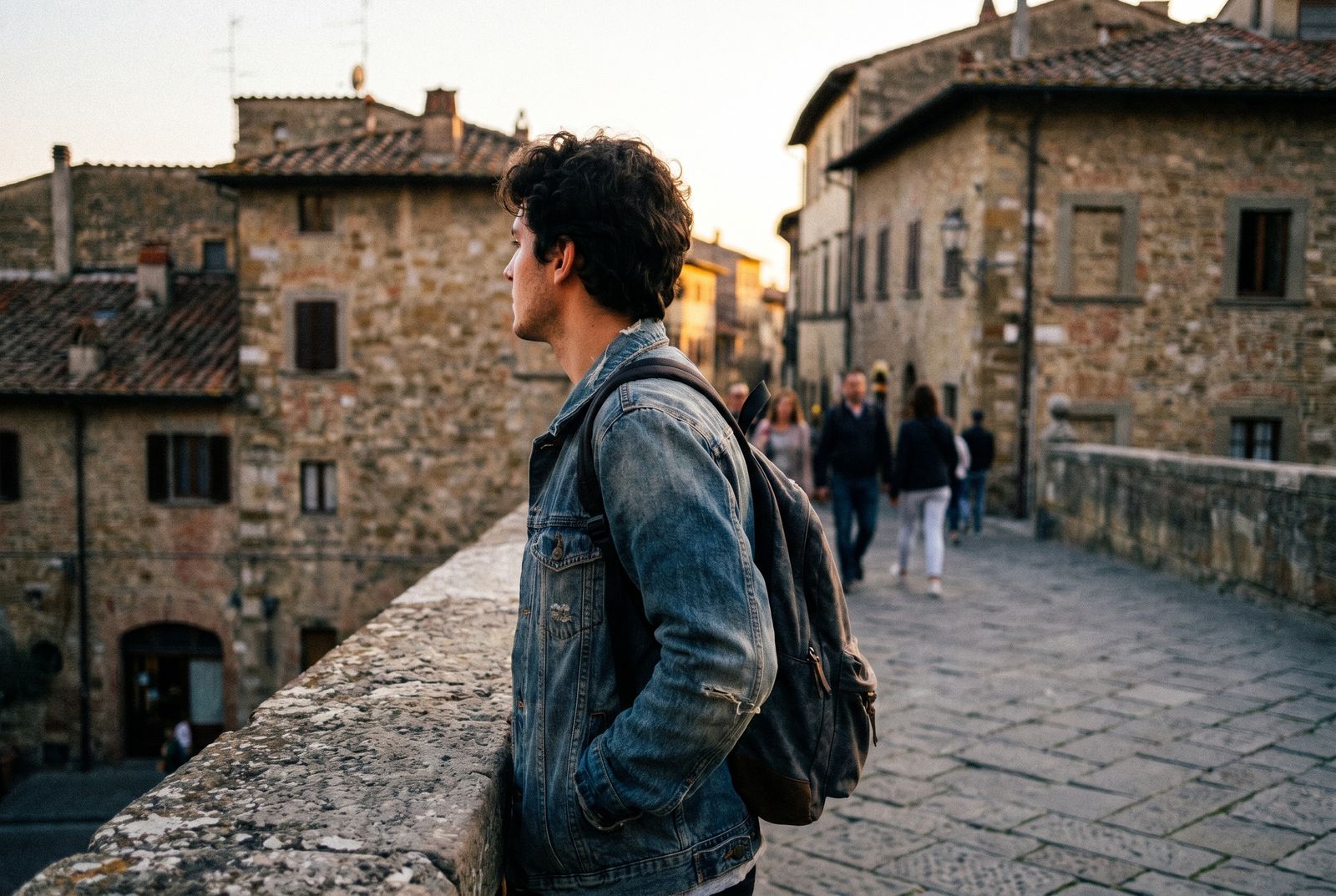
A lot of fixed images circulate about Albanian men: the protector, the jealous macho, the family man with a strong sense of honour. Some of these labels are meant as compliments, others as put-downs, and almost all of them share one problem. They turn millions of very different people into a single type. This article takes the most common stereotypes apart, looks at what is true and what is not, and explains a value that is often misunderstood: besa, the given word.
Why "the" Albanian man does not exist
Before we get to individual stereotypes, it helps to look at the starting point. Albanians live in Kosovo, Albania, North Macedonia, Montenegro and in a large diaspora across Europe and beyond. A man who grew up in a village in rural Kosovo has been shaped differently from one who grew up in Zurich, Munich or Vienna, moving between an Albanian home and a German-speaking school.
Then add education, profession, generation and plain character. The 24-year-old student in Prishtina, the 40-year-old tradesman in Stuttgart and the 60-year-old grandfather in a mountain village share a language and many cultural reference points, but that does not make them think alike. When you date or get to know an Albanian man, you are meeting that one person, not a nation.
The stereotypes are stubborn all the same. It is worth laying them side by side and putting the sober reality next to each one.
| Stereotype | What it often turns into | Reality |
|---|---|---|
| The protector | He decides what is good for her | Taking responsibility yes, running her life no, and it depends on the individual |
| The jealous macho | Control and dominance come with the package | Jealousy is a matter of character, not origin |
| The family man | He only listens to his mother | Being close to family does not rule out one's own decisions |
| The man of honour | Hard posturing, pride at any cost | Besa means reliability, not toughness |
The right-hand column is the reason this article exists at all. Stereotypes tell one simple story; reality tells many.
The protector stereotype
Perhaps the most widespread image is that of the protector. The Albanian man, so the story goes, stands in front of his family, his partner, his friends, and leaves no one behind. There is a real kernel here. Taking responsibility for the people close to you is treated as obvious in many Albanian families, and many men are proud of it.
It becomes a problem when "protecting" tips over into control. Sometimes possessiveness is sold as care: a man who decides where his partner goes and who she talks to claims to be protecting her. But that is not a cultural trait, it is simply controlling behaviour, and it exists in every background. A healthy sense of protecting means being there for each other, not deciding over each other. Many Albanian men live exactly that version, and it appears in none of the clichés.
The "macho" and the jealousy stereotype
Closely related is the macho cliché: the dominant, jealous man who lays down the law. This idea is fed by films, music videos and social-media exaggeration that stage a particular hard model of masculinity. But you should not confuse those performances with everyday life. A music video is a role, not a status report.
Jealousy and dominance are questions of personality and upbringing, not nationality. There are Albanian men who lean towards control, and there are a great many who care about an equal partnership, who listen, look for compromise and take their partner's independence for granted. Judging by the group wrongs the second kind and lets the first off too easily. One person's behaviour says something about him, not about a whole community.
It is worth asking where this image even comes from. Part of it feeds on old patriarchal structures that existed for a long time in rural regions of the Balkans, as in many other parts of Europe, and in places still do. Another part is pure exaggeration, amplified by reality formats, rap and a certain way of showing up on social media. That shapes the outside view strongly but says little about the man actually sitting across from you. Stereotypes about a group are almost always a mix of a small remnant of truth and a large helping of media shorthand.
besa: the value behind the stereotype
One word that keeps coming up around Albanian men is besa. The closest translation is "given word" or "word of honour", but that does not quite capture the depth. Besa means a promise you can rely on, even when keeping it becomes inconvenient. Historically it carried enormous weight: whoever gave their word stood behind it, and breaking besa was considered a serious disgrace.
This leads to a misunderstanding. Besa is not a masculinity ritual or a tough-guy pose. At its core it is a value about reliability: say what you mean, and keep what you say. Applied to a relationship it means nothing mysterious, but something very down to earth. A man who takes besa seriously does not promise more than he can keep, and does not abandon the people he has taken responsibility for.
At the same time, besa should not be romanticised. Not every Albanian man lives it exemplarily, and a word alone does not make a good relationship. Reliability shows in everyday life, in many small actions over years, not in one grand concept. Understand besa as a value rather than a label and you quickly see whether someone actually lives it or only talks about it.
Family, respect and the role of parents
Another stereotype concerns family: the Albanian man, it is said, is closely bound to his parents, respects his elders and puts family above much else. Here too there is a true kernel. In many Albanian families cohesion runs deep, respect for parents is high, and decisions are not made in complete isolation from the family.
For a partner, especially from a different cultural background, this can be unfamiliar. The parents' opinion carries weight, meeting the family is an important step, and a man being close to his mother is the norm, not the exception. What that means in detail and how a first meeting tends to go is covered in the article on meeting the Albanian family.
But here too, measure beats generalisation. Being close to family is not the same as being unable to stand on your own. Many Albanian men manage the balancing act of honouring their family while still leading their own adult life with clear decisions of their own. Some move out early, some stay close to their parents for a long time, and on its own neither says much about character. What matters is whether someone can hold his own position in the relationship when family and partner see things differently. What that balance looks like in practice is the theme of the piece on tradition and modernity in Albanian relationships.
The modern Albanian man between expectation and his own path
Perhaps the most interesting group is the generation that grew up between two worlds. Young Albanian men in the diaspora often carry an inheritance of expectations: be strong, provide for your family, hold on to your roots. At the same time they live in societies with different ideas of masculinity, partnership and the division of tasks. A lot comes out of that friction.
You see men who cook and change nappies and are still proud of where they come from. Men who talk about feelings, which older ideas dismissed as unmanly. Men who feel the outside pressure of expectation but go their own way, sometimes in tune with the family, sometimes in cautious disagreement. A few patterns that keep coming up in conversations with this generation:
- Reliability over show. The value lies more in being there when it counts than in a big performance.
- Respect in both directions. Respect for parents yes, but increasingly understood as mutual, in the partnership too.
- Pride without the cliché. Many identify clearly as Albanian while explicitly rejecting the hard macho role.
- New role models. Household, parenting and career are shared more often, without cultural identity getting lost in the process.
These men fit no single stereotype, neither the flattering one nor the disparaging one. That is exactly the point.
How to leave the stereotypes behind
If you are getting to know an Albanian man, you do well to drop the ready-made images. Neither the romantic one ("he will protect me and put me on a pedestal") nor the suspicious one ("he will be jealous and controlling") gets you anywhere. Both say more about the stereotype than about the person in front of you.
Real questions and real listening help more. How did he grow up with his family? What does his word mean to him? How does he picture a partnership, who decides what, how much closeness to the family matters to him? The answers differ from man to man, and that is the whole point. The same, in reverse, applies to the stereotypes about Albanian women, who fit a template just as poorly. Which app actually helps you see the person instead of the cliché is laid out in the honest comparison.
From stereotype to a real encounter
Stereotypes are convenient because they shortcut the getting-to-know-you part. But they almost always lead you astray, whether they flatter or belittle. An Albanian man is not a category but a person with his own story, his own values and his own relationship to tradition and modernity. Take that seriously and you get further than any list of traits.
That is exactly what getting to know someone is about too. embla is the dating app for Albanians worldwide, for everyone who is looking for a partner with the same roots and wants to see the person, not the cliché. The app launches soon, and the waiting list is open.
Frequently asked questions
What are Albanian men really like?
There is no single type. Albanian men are as varied as anyone else, shaped by family, home region, education and whether they grew up back home or in the diaspora. Common stereotypes about the controlling macho or the self-sacrificing protector fit some men and miss many others entirely.
What does besa mean for Albanian men?
Besa is a person's given word, a promise you can rely on. Historically it was a point of honour with an almost sacred weight. Today besa lives on more as an everyday value: someone who takes it seriously keeps what he promises and stands by the people he has taken responsibility for.
Are Albanian men jealous and controlling?
That is a stereotype, not a fact. Jealousy and control are questions of personality and upbringing, not nationality. Some Albanian men are possessive, many others care deeply about an equal partnership. You cannot read it off someone's background.
Are Albanian men good fathers?
Family carries a lot of weight in Albanian culture, and many men take the role of father and partner very seriously. How involved someone actually is day to day depends on the individual, not on a cultural cliché.
What do Albanian men value in a relationship?
Loyalty, reliability, respect for family and honesty come up often. But just like everyone else, what men want varies enormously from person to person. The best way to learn an Albanian man's values is to talk to him, not to read a list.
Ready for a spark instead of a thousand swipes?
Join the free waitlist and secure 6 months of embla+ free.
Save my spot