Weddings
Albanian Wedding Music: the valle, Live Bands, Emotion
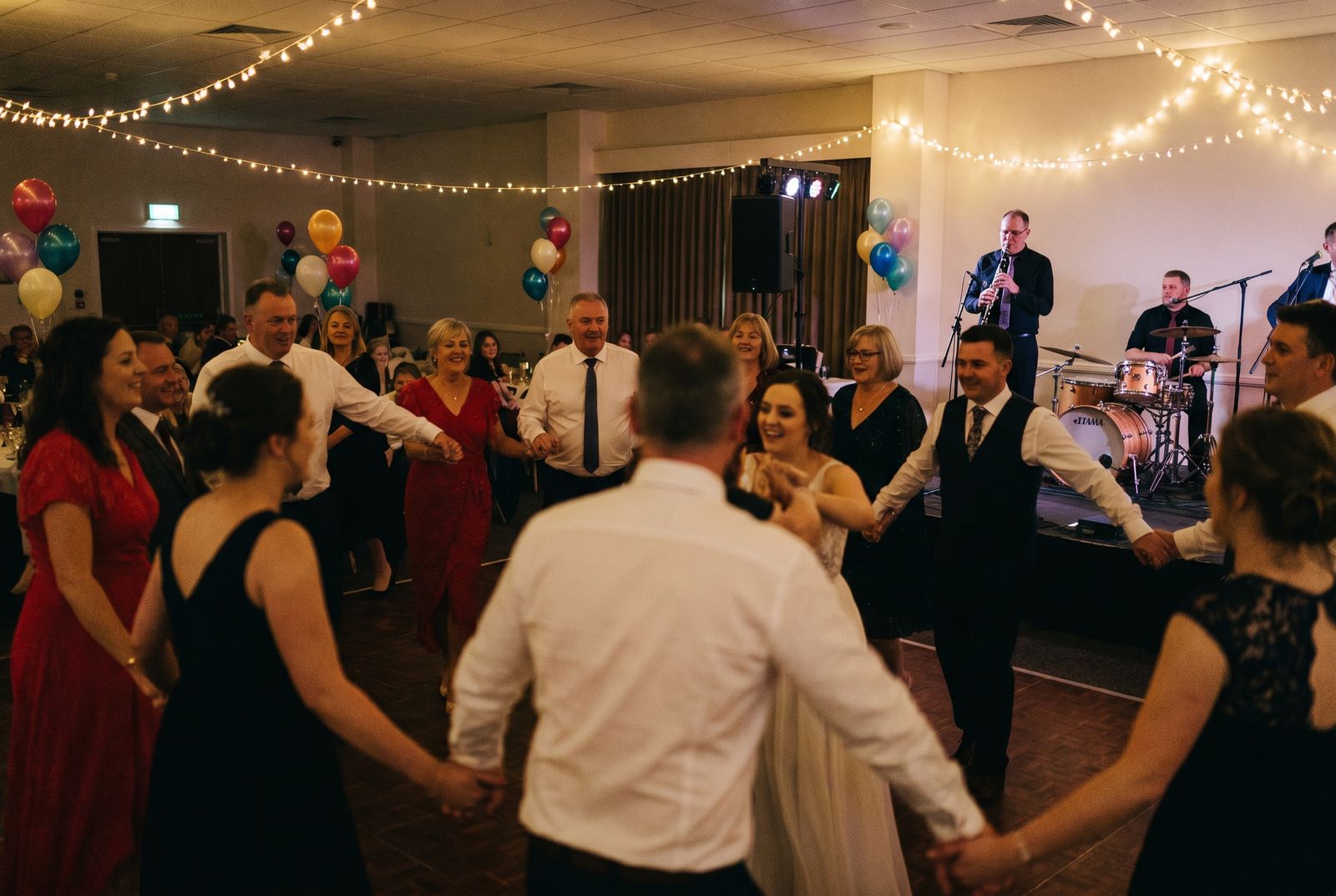
When Albanians get married, the music decides how the night goes. Not the buffet, not the hall, not the decorations: the music. A good band gets three generations onto the dance floor at once, brings the groom's mother to tears and keeps the party alive until four in the morning. Music is the emotional heart of the dasma, the Albanian wedding, and this piece explains why that is and what it sounds like.
Why live music is the heart of the dasma
At many weddings in Germany a playlist runs in the background. At an Albanian wedding a person stands at the front and sings. That difference is bigger than it sounds. A singer reads the room. He notices the great-aunt sitting at her table and sings the one song that gets her on her feet. He pushes the tempo when the dance floor starts to tip over. He dedicates a song to the groom, then the bride, then the mother, and suddenly thirty people are standing in a circle with wet eyes.
No recording can deliver those moments. That is why, for many families, a live band is not a matter of taste but of respect. If you invite people to your wedding, you provide music that carries the evening. The band is often the single biggest cost after the venue, and that is no accident. There is more on those costs in the overview of Albanian wedding costs.
The valle: the dance that connects everyone
The image most people carry of an Albanian wedding is the valle. A circle or long line of people holding hands, with a leader at the front performing the intricate steps while everyone else keeps the basic rhythm. Whoever leads gets to shine. Whoever follows at the back has nothing to fear: you learn the basic steps in two minutes, and that is the whole point. The valle leaves no one out.
There is no single valle but dozens. Some are fast and stamping, some almost solemn. One famous example is the Valle e Rugoves, a men's dance from the Rugova gorge in Kosovo, in which the dancers hold a taut posture with arms spread wide, almost like eagles. In southern Albania the dances are often softer and more flowing, in the north more angular. At a diaspora wedding all of it mixes: guests from Kosovo, from Tetovo, from southern Albania, all in the same circle.
A cloth often plays a part. The leader holds a handkerchief that marks the link to the next person in the line and allows spins without anyone grabbing a sweaty hand. If you are a guest joining for the first time, simply slot in at the back and count along. There are more etiquette tips for guests in the guest guide to Albanian weddings.
The instruments: from the cifteli to the synthesizer
The sound of an Albanian wedding has changed, but you can still hear its roots. These instruments shape it:
- Clarinet (gerneta): The soul of celebration music, especially in the south and in folk music. A good clarinet can weep and laugh within the same song.
- Accordion: Carries the melody and the drive, essential for the dance pieces.
- Frame drum (def): The rhythmic backbone of many Kosovo songs, often fitted with small jingles.
- Big drum (lodra or tupan): The deep pulse that drives the valle and can be felt across the whole hall.
- cifteli: A two-string lute from northern Albania and Kosovo, closely tied to narrative and heroic songs.
- Keyboard and synthesizer: Almost always present today. They replace whole brass sections and provide the modern, full sound many people expect.
The blend often reveals where a family comes from. A celebration heavy on clarinet and accordion sounds different from one led by def and keyboard. Both are right. These tonal colors are part of the many regional differences that also show up in Albanian wedding traditions.
Classics versus playlist: the generation question
At a diaspora wedding, people dance together who grew up on very different music. The grandparents know the songs of singers like Nexhmije Pagarusha and Shkurte Fejza by heart, voices that defined whole eras. To them these are not old songs but their youth, their country, their memory. When one of those classics comes on, the dance floor fills with a different kind of energy.
The grandchildren, born in Frankfurt or Zurich, listen to Albanian pop, RnB and rap. Names like Dhurata Dora, Elvana Gjata, Butrint Imeri or Ledri Vula play in their headphones and, later in the night, at the wedding too. A good DJ or band knows both worlds and knows when to switch. The early evening often belongs to tradition and the emotional songs, the late night to the party. That bridge between heritage and present-day life runs through almost everything in the diaspora, not only the music.
Tallava and the art of singing for one guest
No honest piece about Albanian wedding music can leave out Tallava. The style, strong in Kosovo and North Macedonia and shaped by Roma musicians, is improvised, endlessly rhythmic and loud. The singer often performs directly for one person: for the groom, for the uncle who traveled in from Switzerland, for the friend who paid for the celebration. Money is thrown or pressed to the singer's forehead, a gesture of respect and generosity.
Tallava divides opinion. Some love its raw energy, others find it too wild for a wedding. Both reactions are common, and both are fine. One thing worth knowing as a guest: throwing money is not showing off, it is part of the game. It honors the singer and the person the song is for.
The songs that bring tears
Not every wedding song is meant for dancing. There is a fixed place for the quiet, heavy moments. The kenge per nusen, the song for the bride, often accompanies the moment she parts from her parents. The song for the mother hits almost everyone in the hall, because everyone has a mother or is one. In those minutes the dancing stops, and the music does something no other part of the program can: it lets everyone be moved together, without anyone feeling embarrassed.
These songs are why the order of the evening is no accident. An experienced band builds tension, gives the emotion its place, then tips over into celebration. A band that masters that flow gets recommended, often for years and across borders.
Music in the diaspora: flown in or local
For families in Germany, Switzerland or Austria there is a practical question: where does the music come from? There are essentially three routes.
| Option | What it involves | When it fits |
|---|---|---|
| Fly in a band from home | A known singer or band travels from Kosovo or Albania | Large celebrations when a specific name is wanted |
| Local diaspora band | Musicians who live and play in Germany, Switzerland or Austria | The most common and practical route |
| DJ plus live singer | A DJ handles the playlist, a singer the emotional live moments | Smaller budget, modern celebrations |
The fees are among the larger costs of a wedding, but they swing widely by fame and travel. Reliable figures depend so much on the individual case that any blanket number misleads. The best move when planning is to ask several bands directly and compare what the price includes: number of musicians, duration, sound gear, travel.
What the perfect run of the night sounds like
A successful music night has an arc. Roughly, it often looks like this:
- Reception: soft instrumental music or quiet classics while guests arrive.
- Entrance of the couple: a big, ceremonial moment, often with a specific song the family chose.
- Emotional songs: for bride, groom and parents, usually early in the evening.
- Dancing with the valle: the circles grow, the drum takes over.
- Late party phase: pop, rap, Tallava, until the dance floor never empties.
No evening runs exactly like this, and that is the appeal. A band that reads the room departs from the plan the moment the mood asks for it.
From the wedding to your own story
Anyone who has stood in one of those circles, a stranger's grandmother on the left and a cousin on the right, understands why this music carries so much belonging. It is shared memory, even for those who grew up far from home. And it is often at exactly these celebrations that a new story begins: two people who, between two songs, really look at each other for the first time.
embla is the dating app for Albanians around the world, for everyone looking for someone with the same roots and the same songs in their ear. The app launches soon, and the waiting list is open.
Frequently asked questions
What music is played at an Albanian wedding?
Usually a mix of live folk music (muzike popullore) for the circle dances, emotional songs for the bride, groom and parents, and modern pop and Tallava later in the night. A live band or a singer with a keyboard is almost always present.
What is the valle?
The valle is the traditional Albanian circle or line dance. Dancers hold hands or a handkerchief, follow a leader at the front and move to a fixed rhythm. It is the core of the dancing at almost every wedding.
Does an Albanian wedding need a live band or is a DJ enough?
Both happen, often together. Many families book a live band or singer for the emotional and traditional moments and a DJ for the late party phase. Live music is seen as the more prestigious and emotional experience.
What is Tallava music?
Tallava is an improvised, highly rhythmic style played mostly at weddings in Kosovo and North Macedonia. The singer often performs directly for individual guests while money is thrown. The style divides opinion but is hugely popular at celebrations.
Which instruments belong to Albanian wedding music?
The classic instruments are the clarinet (gerneta), accordion, the frame drum (def) and the big drum (lodra), plus the two-string cifteli lute in some regions. Today a keyboard and synthesizer almost always fill out the sound.
Ready for a spark instead of a thousand swipes?
Join the free waitlist and secure 6 months of embla+ free.
Save my spot