Dating
Long-Distance Love: Germany and Kosovo, Made to Last
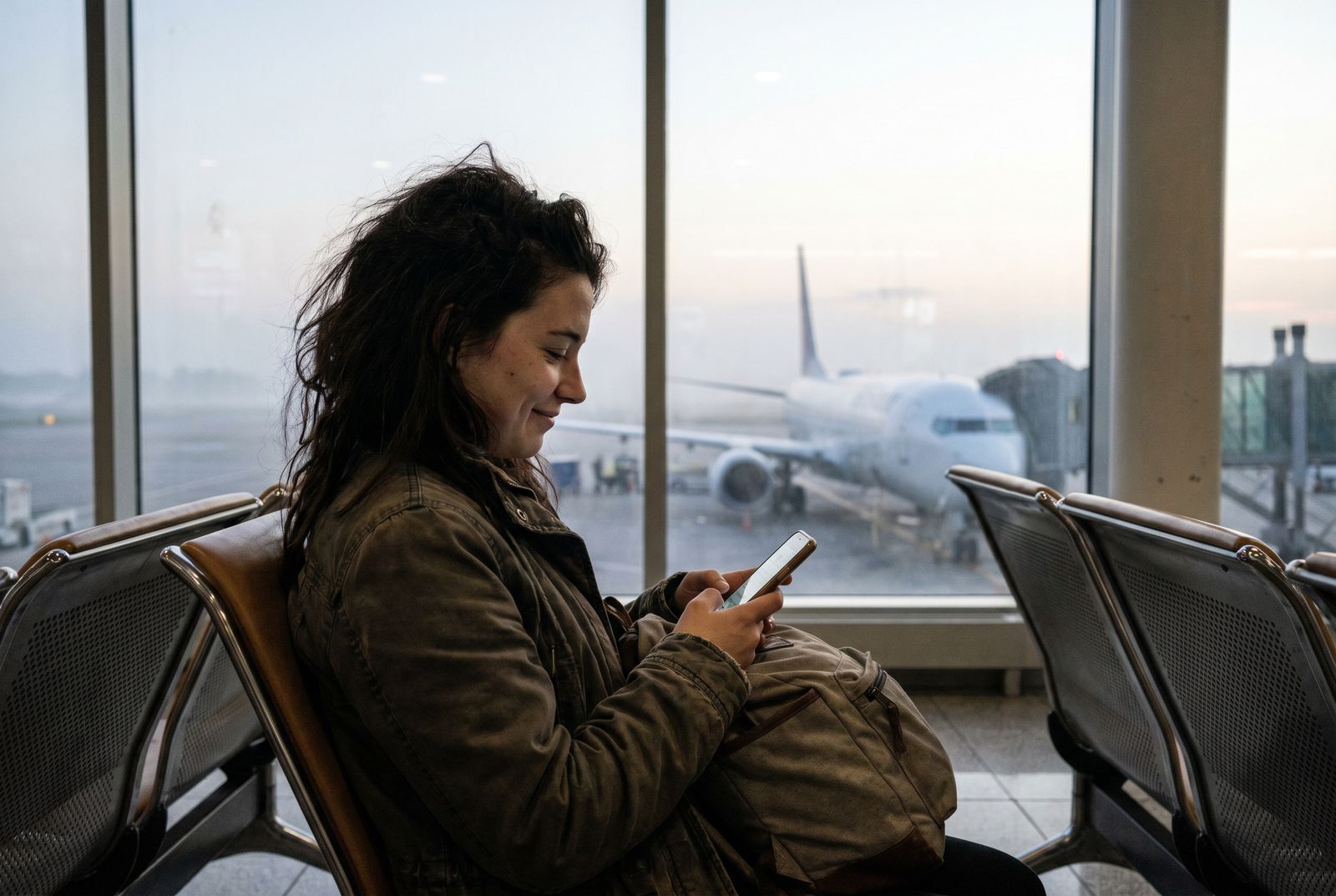
A long-distance relationship between Germany and Kosovo does not break over the time difference, because both sit in the same time zone. What actually matters is flight prices, the diaspora's summer rhythm, and the question of when airport weekends turn into a shared home. This piece is about how couples run daily life across the distance, what it honestly costs, and how to hold the expectations of two families in one hand.
The time zone was never the problem
Kosovo and Germany sit in the same time zone, so there is no time difference at all. When lunch break starts in Konstanz, it is exactly the same hour in Pristina. No couple has ever fallen apart over a clock. Anyone who thinks it will has not run a long-distance relationship yet.
The real problem is availability. One person is stuck on a late shift, the other is buried in exams at university in Pristina. You are awake at the same time and still not there for each other. Distance is rarely geographic. Most of the time it is a calendar problem: two lives running on different beats, having to tune into each other again every single day.
That is exactly why the best advice is also the least romantic one: agree on a fixed rhythm. Not "we call when we have time," but a reliable window that both of you know. The evening video call that happens even when nothing much did. It is the trivial conversations that hold a relationship together, not the big ones. If you only reach out for the highlights, you lose the feel for the other person's ordinary days.
Summer splits the year in two
For the Albanian diaspora there is no neutral yearly calendar. There is summer, and there is the rest. In July and August half of Germany drives home, the motorways toward the Balkans are packed, and every village has a wedding. If you are waiting in Kosovo for someone from the diaspora, you are usually waiting for exactly these weeks. For more on that summer phenomenon and how holiday encounters turn into real relationships, our piece on diaspora summer romance is worth a read.
This rhythm shapes long-distance couples more than many admit. Summer is the closeness you save up for all year. You plan toward it months ahead, you save toward it, and sometimes you even argue about how to split those precious three weeks between your partner, your parents, your cousins, and the weddings you have to attend anyway.
Then September arrives. The goodbye at Pristina airport is one of the most honest moments a diaspora relationship knows: the shared, unspoken knowledge that it will now be months again. Couples who get through those weeks without writing the whole thing off as "just a summer thing" have already survived the hardest part.
Routines that actually carry across distance
Closeness over distance does not come from hours-long phone calls. It comes from reliability and shared daily life. A few things that work for many couples:
- The good-morning and good-night anchor. Two short messages that frame the day. Not essays, just the signal: I am thinking of you before the day swallows me.
- Do something together, not just talk. Watch the same series in parallel, cook with the video call propped on the counter, take a Sunday walk while on the phone. Shared action beats pure talking.
- Voice notes over walls of text. The voice carries a mood that a chat swallows. A voice note on the way home feels closer than ten lines of typing.
- Small surprises across the distance. A delivery that brings her dinner while she studies. A photo of the café you sat in over the summer. Attention costs more thought than money.
Balance is the point. Constant availability sounds like love but tips quickly into control. Nobody owes an instant reply to a read message at two in the morning. Trust also means letting the other person live their own life without reading meaning into every gap in the chat.
The cost nobody likes to talk about
Long-distance relationships are expensive, and not only because of flights. Do the honest math and it becomes clear why some couples hit a financial wall. The table below shows rough real-world figures, not fixed prices, and they swing hard with the season and how early you book.
| Item | Rough range | Note |
|---|---|---|
| Return flight Germany-Pristina | 80–250 € | Much higher in summer and around holidays, booking early pays off |
| Travel to and from the airport | 20–80 € | Depending on train, fuel, parking or a lift |
| Spending on the ground per visit | 100–300 € | Gifts for the family, eating out, day trips |
| Data roaming and calls | low | Usually included within the EU, check Kosovo separately |
Over a year it adds up. Many couples land in the mid-hundreds per month once everything is counted. That is no reason to talk the relationship down, but every reason to talk about it openly. Money is a common quiet fault line in long-distance couples: who flies more often, who can afford the flights more easily. Fairness here does not have to mean fifty-fifty, but a split that leaves both feeling seen. The healthiest move is to agree early on a small shared travel pot that both pay into where they can.
Two families, two sets of expectations
In an Albanian long-distance relationship you never date as just two people. Sooner or later the families are in the room, and in Kosovo often sooner than in Germany. For many parents there, a serious relationship is tightly bound to the question of the future: where is this going, and when? A non-committal long-distance relationship dragging on for years with no visible goal is harder for them to accept than for a German circle of friends that often relaxes into "let's see how it goes."
This is not pressure out of ill will. It is worry and care in a different key. Anyone who grew up in Germany with a partner in Kosovo sometimes sits exactly between those two tempos: here the easy stance of friends, there the clear expectation that a real relationship leads somewhere. Honesty helps more than dodging. If you know where you want this to go, you may and should say so. If you do not know yet, that is an answer too, just one that takes some nerve to hold.
One lesson from many diaspora stories: bring the families in early and respectfully rather than presenting them with a done deal. A video call where you briefly greet the parents, a small host gift on the next visit, that opens doors. For more on how the diaspora as a whole dates between family and its own life, see our overview of dating in the Albanian diaspora.
When moving in together becomes realistic
At some point comes the question that every long-distance relationship either carries or cracks under: how does this continue, in one place? The best time to face it is not when the longing peaks, but when both share the same goal and a rough timeline. A vague "one day we'll live together" carries no relationship over years. A concrete "after your degree, likely in about a year and a half, in Germany" has a chance.
The moment a permanent move is on the table, the bureaucratic part enters. Keywords like family reunification, visa and residence permit show up, and this is where the advice column ends. These procedures change, hinge on the individual case, and tolerate no half-truths from the internet. Only the responsible immigration office in Germany and the German mission abroad in Kosovo give binding information, for example via the pages of the German Federal Foreign Office. This article is orientation, not legal advice.
For couples considering the route of marriage, the practical side, meaning a civil marriage in Kosovo, documents and recognition in Germany, is covered in our piece on getting married in Kosovo. The same holds there: an app and a magazine replace no registry office and no authority.
Trust is the real currency
In the end a long-distance relationship survives not on good logistics but on trust. Jealousy grows where information is missing. Leave the other person in the dark about where you spent the evening and you feed a fantasy worse than any truth. The best guard against suspicion is an open, unbothered daily life: say who you danced with at the wedding, send a photo from the night out with friends, answer questions without treating them as an interrogation.
Control is the opposite of that, and it never works. Location histories, doing math on someone's online times, screenshots of chats, all of it signals that something is missing and repairs nothing. Trust is built from many small reliable moments over months, not from evidence.
And then there is the reward. The moment you walk through the arrivals hall in Pristina again after weeks and scan the crowd for one face. Couples who know it often say reunions in a long-distance relationship feel more intense than for anyone else. Distance takes a lot, but it gives back this one thing: closeness never becomes a given.
A relationship across 1,500 kilometres is not a stopgap you merely endure until real life begins. It is real life, just put to the test. If you are going to run one, start finding the other person before the distance even exists. Which app suits Albanian singles for that is laid out in the honest comparison. embla is the dating app for Albanians worldwide, for the diaspora and for home, for everyone looking for someone with the same roots. Here a like is called a Spark and always carries a few words, because a connection starts with a sentence, not a swipe. The app launches soon, and the waitlist is open.
Frequently asked questions
Can a long-distance relationship between Germany and Kosovo actually work?
Yes, and countless diaspora couples live it for years. What decides it is not the distance but a reliable rhythm of calls and visits, a shared goal for the time after, and families who back the relationship. Couples who plan visits early and talk openly about money and expectations carry the distance far more easily.
How often do couples see each other in a Germany-Kosovo relationship?
Realistically, an extended weekend every six to ten weeks, plus a longer stretch in summer. The exact frequency depends on holiday days, flight prices and shift schedules. Many couples stack visits around public holidays to squeeze more days together out of little leave.
How much does a long-distance relationship to Kosovo cost per month?
Flights are the biggest line. A return flight to Pristina runs roughly between 80 and 250 euros depending on the season, more during summer and around holidays. Add travel to the airport and spending on the ground, and many couples land in the mid-hundreds per month. These are rough real-world figures, not fixed prices.
When should a long-distance couple move in together?
When both share the same goal and a rough timeline, not just a vague someday. The moment a permanent move or family reunification is on the table, residence law and paperwork enter the picture. For that, the immigration office or the relevant German mission abroad is the right address, and this article is no substitute for legal advice.
How do you handle jealousy in a long-distance relationship?
Jealousy grows where information is missing. An easy, honest daily rhythm beats control every time: say who you were out with, share a photo from the evening, answer questions without turning them into an interrogation. Trust is built from many small reliable moments, not from location histories.
Ready for a spark instead of a thousand swipes?
Join the free waitlist and secure 6 months of embla+ free.
Save my spot